Aluminum vs Resin Wicker vs Teak: Which Patio Furniture Material Lasts
Choosing the right material is the most important patio furniture decision you will make. Material determines durability, maintenance requirements, aesthetics, and long-term value. We compared the three most popular outdoor furniture materials - aluminum, resin wicker, and teak - across every factor that matters for outdoor living.
This guide also covers HDPE lumber (POLYWOOD) as a fourth option that has emerged as a leading alternative to traditional materials.
Material Comparison Overview
| Spec | Cast Aluminum /10 | PE Wicker/Aluminum /10 | Grade A Teak /10 | HDPE Lumber /10 |
|---|---|---|---|---|
| Rating | /10 | /10 | /10 | /10 |
Prices change daily — tap Check Price for the current Amazon price.
Prices change daily — tap Check Price for the current Amazon price.
Detailed Material Analysis
Aluminum Outdoor Furniture
Overview: Aluminum offers the best balance of durability, weight, and price for most buyers. Cast aluminum and tubular aluminum both provide complete rust immunity while remaining lightweight enough for easy repositioning.
Pros:
- Never rusts under any conditions
- Lightweight for easy rearrangement
- Available in countless styles from traditional to modern
- Most affordable premium material
- Requires only occasional soap-and-water cleaning
Cons:
- Can dent if struck by heavy objects
- Heats up in direct sunlight (add cushions)
- Powder coating can scratch and chip
- Less premium appearance than teak
Best For: Buyers wanting durability without high maintenance or premium pricing. Ideal for humid climates, coastal areas, and poolside use.
Expected Lifespan: 15-25 years with basic care
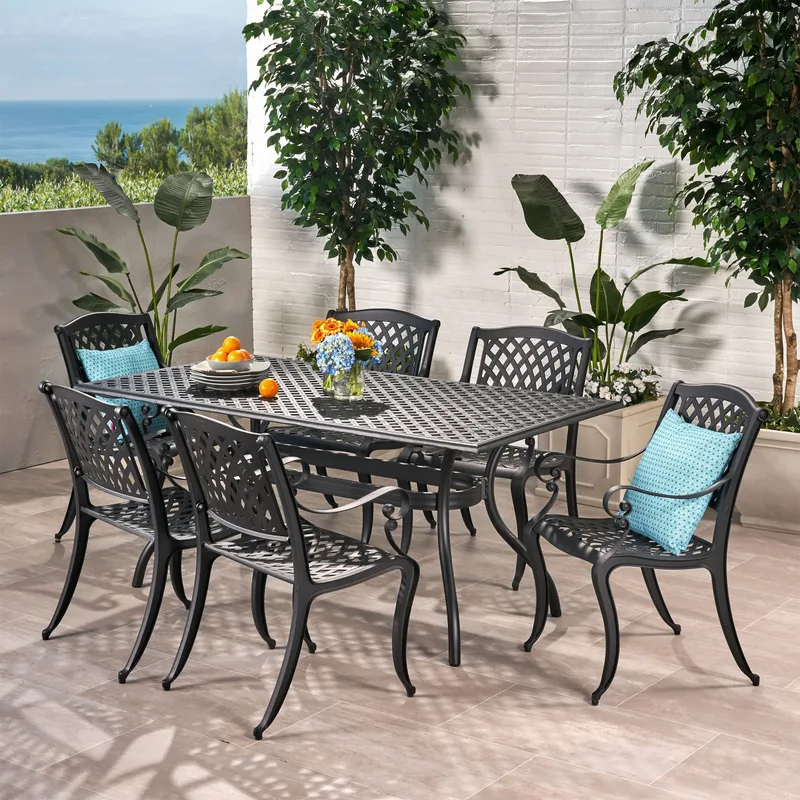
Christopher Knight Home Puerta Aluminum Set
Resin Wicker Outdoor Furniture
Overview: Resin wicker (also called PE wicker or synthetic wicker) provides the traditional wicker aesthetic without the fragility of natural materials. Quality varies significantly - look for PE (polyethylene) wicker on aluminum frames for best results.
Pros:
- Attractive woven appearance
- More affordable than aluminum or teak
- All-weather resistant (UV and moisture)
- Comfortable without cushions (rounded weave)
- Flexible design options
Cons:
- Can fade after 4-5 seasons of sun exposure
- Weave can loosen or fray over time
- Steel frames can rust if coating chips
- Shorter lifespan than metal alternatives
- Requires periodic cleaning to prevent mold
Best For: Budget-conscious buyers who prioritize aesthetics. Good for covered patios or moderate-weather climates.
Expected Lifespan: 8-12 years (PE wicker on aluminum frame); 5-8 years (PE wicker on steel frame)
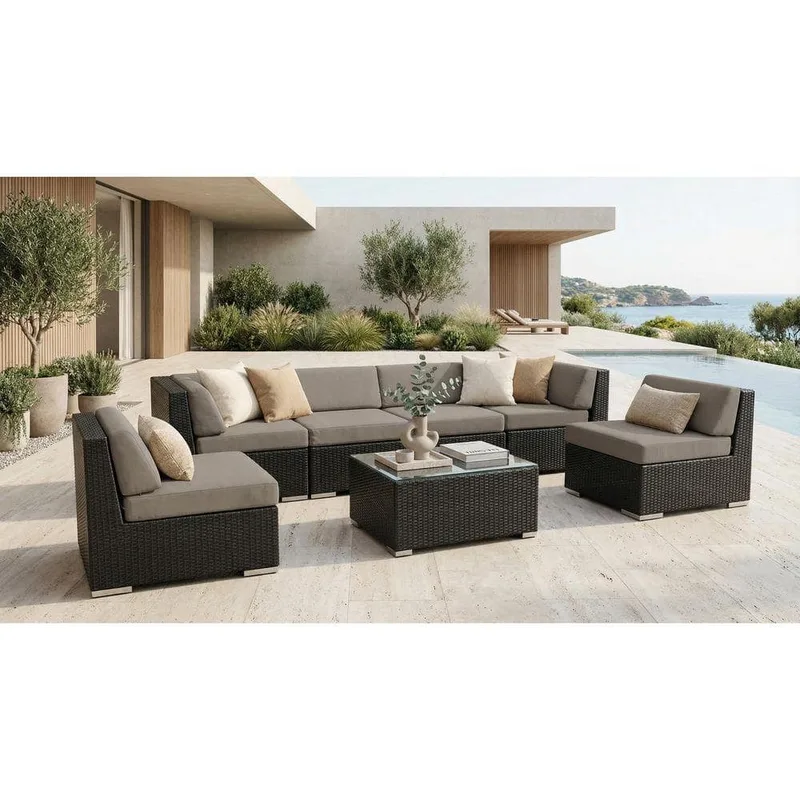
Teak Outdoor Furniture
Overview: Teak is the gold standard for outdoor furniture materials. Grade A teak from Indonesia or South America contains high natural oil content that resists water, insects, and decay without any treatment.
Pros:
- Longest lifespan of any material (50+ years)
- Natural beauty with unique grain patterns
- Develops attractive silver patina if untreated
- Strongest material - highest weight capacity
- Heirloom quality - passed between generations
- Sustainably harvested from plantation sources
Cons:
- Highest price point ($2,000-8,000+)
- Requires annual oiling to maintain golden color
- Heavy pieces difficult to reposition
- Will gray naturally without treatment
- Grade confusion (A, B, C) creates quality variance
Best For: Buyers seeking heirloom-quality furniture willing to invest in premium materials and perform annual maintenance. Ideal for traditional and transitional design aesthetics.
Expected Lifespan: 50+ years with care; 25+ years without maintenance
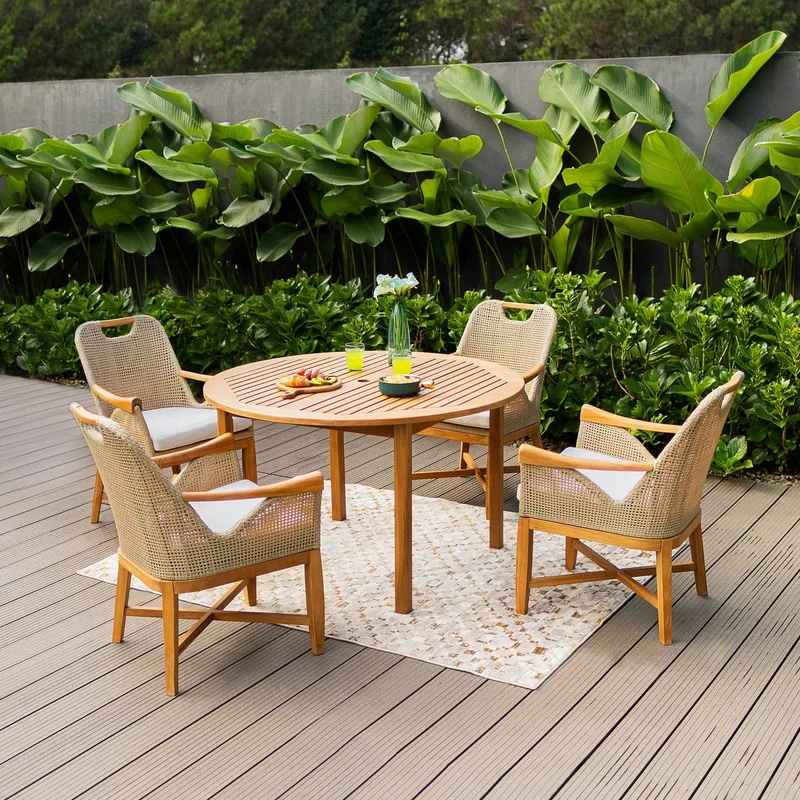
Cambridge Casual Monterey Teak 5-Piece Set
HDPE Lumber (POLYWOOD)
Overview: HDPE (High-Density Polyethylene) lumber represents a modern alternative that combines zero maintenance with exceptional durability. Made from recycled materials including ocean-bound plastics, HDPE furniture carries the longest warranties in the industry.
Pros:
- Zero maintenance - never paint, stain, or seal
- 20-year warranties standard
- Made from recycled materials (eco-friendly)
- Resistant to fading, cracking, warping, splintering
- Works in any climate including coastal areas
- Colors remain consistent (no weathering)
Cons:
- Heavy pieces (similar to teak)
- Premium pricing ($1,500-5,000+)
- Limited to solid colors (no wood grain)
- Manufactured appearance vs natural materials
- Assembly required (not pre-assembled)
Best For: Buyers prioritizing zero maintenance and long-term value. Excellent for coastal environments, harsh weather, and busy lifestyles.
Expected Lifespan: 20-30 years
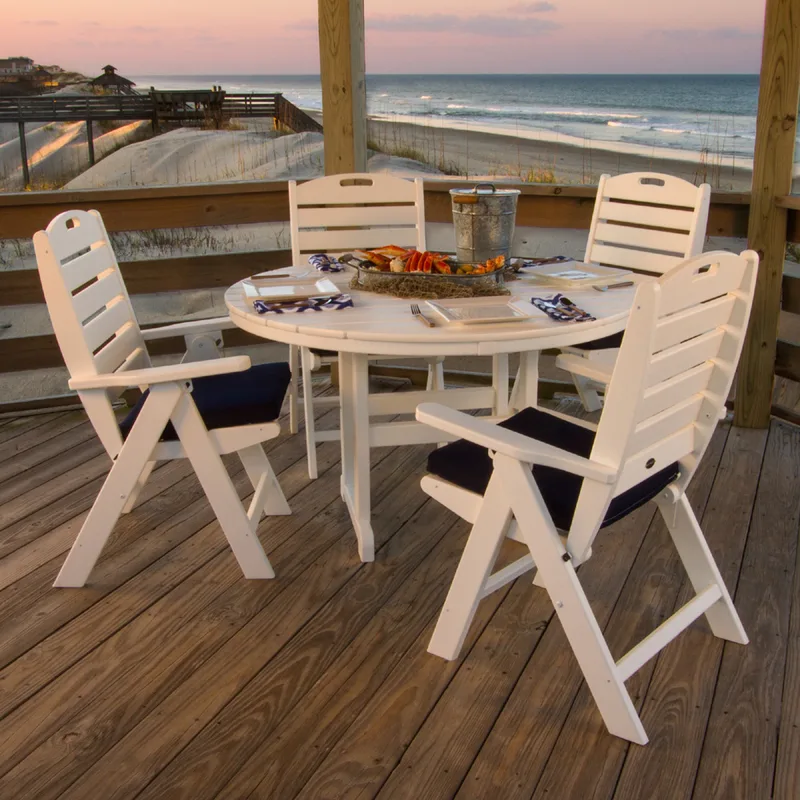
Head-to-Head Comparisons
Aluminum vs Wicker
| Factor | Aluminum | Wicker |
|---|---|---|
| Price | Higher ($800-2,000) | Lower ($500-1,500) |
| Durability | 15-25 years | 8-12 years |
| Maintenance | Low (occasional cleaning) | Moderate (regular cleaning) |
| Weight | Lightweight | Medium |
| Comfort | Requires cushions | Comfortable without cushions |
| Aesthetics | Modern/Traditional | Traditional/Cottage |
Verdict: Choose aluminum for longevity and low maintenance. Choose wicker for aesthetics and comfort at lower prices.
Aluminum vs Teak
| Factor | Aluminum | Teak |
|---|---|---|
| Price | Lower ($800-2,000) | Higher ($2,000-8,000) |
| Durability | 15-25 years | 50+ years |
| Maintenance | Low | Annual oiling |
| Weight | Lightweight | Heavy |
| Aesthetics | Various styles | Natural elegance |
| Resale Value | Moderate | High |
Verdict: Choose aluminum for value and convenience. Choose teak for natural beauty and heirloom quality.
Wicker vs Teak
| Factor | Wicker | Teak |
|---|---|---|
| Price | Lowest ($500-1,500) | Highest ($2,000-8,000) |
| Durability | 8-12 years | 50+ years |
| Maintenance | Moderate | Annual |
| Comfort | High (woven surface) | Moderate (wood slats) |
| Aesthetics | Casual/Cottage | Elegant/Traditional |
| Value Retention | Low | High |
Verdict: Choose wicker for budget and comfort. Choose teak for investment and longevity.
HDPE vs Teak
| Factor | HDPE | Teak |
|---|---|---|
| Price | Mid-High ($1,500-5,000) | Highest ($2,000-8,000) |
| Durability | 20-30 years | 50+ years |
| Maintenance | None | Annual oiling |
| Aesthetics | Solid colors | Natural wood grain |
| Environmental | Recycled materials | Plantation sourced |
| Warranty | 20 years | Lifetime structural |
Verdict: Choose HDPE for zero maintenance with excellent durability. Choose teak for natural beauty and longest lifespan.
Climate Considerations
Coastal/Saltwater Areas
Best: HDPE or Aluminum (both resist salt corrosion) Avoid: Steel-frame wicker (will rust quickly)
Hot, Sunny Climates
Best: Teak or HDPE (both resist UV damage) Consider: Aluminum heats up; add cushions Caution: Wicker fades faster in intense sun
Humid/Rainy Climates
Best: HDPE or Aluminum (no moisture absorption) Consider: Teak handles moisture well but requires oiling Caution: Wicker can trap moisture; needs drainage
Cold/Snowy Climates
Best: HDPE (handles freeze-thaw cycles) Consider: Teak and aluminum perform well Caution: Wicker can crack in extreme cold
Cost Analysis Over Time
Considering purchase price, maintenance costs, and expected lifespan:
| Material | Initial Cost | Annual Maintenance | 20-Year Total Cost | Cost Per Year |
|---|---|---|---|---|
| PE Wicker (steel) | $600 | $25 | $1,800 (3 sets) | $90 |
| PE Wicker (aluminum) | $900 | $25 | $1,950 (2 sets) | $98 |
| Cast Aluminum | $1,300 | $10 | $1,500 | $75 |
| HDPE Lumber | $2,000 | $0 | $2,000 | $100 |
| Grade A Teak | $3,000 | $50 | $4,000 | $200 |
Based on comparable 5-piece dining sets
Key Insight: Aluminum provides the lowest long-term cost. HDPE offers best value when zero maintenance matters. Teak costs more but can last 50+ years (extended analysis favors teak).
Making Your Decision
Choose Aluminum If:
- You want the best balance of durability, weight, and price
- You live in a humid or coastal climate
- You prefer minimal maintenance
- You like to rearrange furniture frequently
Choose Wicker If:
- Aesthetics are your top priority
- You have a covered patio or moderate climate
- Budget is a primary concern
- You expect to replace furniture every 8-12 years
Choose Teak If:
- You want furniture that lasts generations
- Natural wood beauty is important to you
- You can commit to annual maintenance
- You view furniture as an investment
Choose HDPE If:
- Zero maintenance is non-negotiable
- You want excellent durability with long warranty
- Environmental recycling appeals to you
- You live in any challenging climate
Related Guides
For specific teak recommendations, see our Best Teak Outdoor Furniture guide.
For wicker options, check our Best All-Weather Wicker Furniture guide.
For the complete overview, see our Best Patio Furniture in 2026 comprehensive guide.
Frequently Asked Questions
What is the most durable outdoor furniture material?
Grade A teak offers the longest lifespan at 50+ years. HDPE lumber follows at 20-30 years with zero maintenance. Cast aluminum lasts 15-25 years. PE wicker lasts 8-12 years depending on frame material. For durability with minimal care, HDPE provides the best combination.
Is teak worth the extra money?
Yes, if you view furniture as a long-term investment. A teak set lasting 50 years costs less per year than wicker replaced every 8 years. Teak also maintains resale value and can become heirloom furniture. However, if you prefer changing styles frequently, more affordable materials make sense.
What is the difference between PE wicker and HDPE wicker?
PE (polyethylene) wicker is the standard synthetic wicker material used on most outdoor furniture. HDPE (high-density polyethylene) wicker is a premium grade with tighter weave, better UV resistance, and longer lifespan. HDPE wicker typically costs 20-40% more but lasts 2-3x longer.
Does aluminum patio furniture rust?
No, aluminum cannot rust. Unlike steel or iron, aluminum forms a natural oxide layer that protects it from corrosion. Powder-coated aluminum provides additional protection against scratches and color fading. This makes aluminum ideal for humid climates, poolside use, and coastal areas.
How do I maintain teak outdoor furniture?
For golden color: Apply teak oil or sealer annually, typically in spring. Clean with mild soap and soft brush before application. For natural silver patina: No maintenance required - simply let teak weather naturally. Clean occasionally to remove debris. Both approaches preserve structural integrity for decades.
What is POLYWOOD made from?
POLYWOOD is made from HDPE (high-density polyethylene) lumber, primarily sourced from recycled materials including ocean-bound plastics and milk jugs. The material is colored throughout (not painted), making it resistant to fading, scratching, and peeling. POLYWOOD carries 20-year residential warranties.
Final Recommendations
Best Overall Value: Cast aluminum provides the lowest 20-year cost with minimal maintenance and excellent durability.
Best for Zero Maintenance: HDPE lumber (POLYWOOD) requires no care while offering 20-year warranties.
Best for Heirloom Quality: Grade A teak lasts 50+ years and appreciates in character over time.
Best Budget Option: PE wicker on aluminum frames balances aesthetics with reasonable durability.
Your ideal material depends on priorities: aesthetics, budget, maintenance tolerance, and expected ownership duration. All four materials can provide years of outdoor enjoyment when matched appropriately to your climate and lifestyle.