Disclosure: BackyardRanked is reader-supported. When you buy through links on this page, we may earn an affiliate commission at no additional cost to you.
Choosing between gas, charcoal, and pellet grills remains one of the most debated decisions in outdoor cooking. After researching fuel costs, flavor science, convenience factors, and long-term ownership experiences, we created this comprehensive guide to help you make the right choice.
Each fuel type excels in different areas. The best grill for you depends on how you cook, what flavors you prefer, and how much time you want to spend managing your fire.
Quick Comparison
| Spec | Weber Spirit II E-310 $489 9.3/10 | Weber Kettle Premium 22 $189 9.1/10 | Traeger Pro 575 $799 9.4/10 | Kamado Joe Classic III $2,199 9.6/10 | Weber Genesis II E-335 $1,199 9.5/10 | Camp Chef Woodwind WiFi 24 $699 9.2/10 |
|---|---|---|---|---|---|---|
| Rating | 9.3/10 | 9.1/10 | 9.4/10 | 9.6/10 | 9.5/10 | 9.2/10 |
Prices change daily — tap Check Price for the current Amazon price.
Prices change daily — tap Check Price for the current Amazon price.
Gas Grills: The Convenience Champion
Detailed Pros
Instant startup and precise control. Turn a knob, press a button, and you are grilling within 10-15 minutes. Gas grills let you dial in exact temperatures across multiple zones, making them ideal for cooking different foods simultaneously. This precision appeals to weeknight cooks who want predictable results without babysitting the fire.
Minimal cleanup and maintenance. Modern gas grills feature grease management systems that funnel drippings into disposable trays. You will spend minutes cleaning instead of dealing with ash disposal. Annual maintenance involves checking connections, cleaning burners, and replacing worn parts.
Consistent performance year-round. Gas grills perform reliably in wind, cold, or humidity. The enclosed burner system maintains heat regardless of external conditions. This consistency matters if you grill frequently throughout the year.
Detailed Cons
Flavor limitations. Gas produces water vapor and carbon dioxide during combustion, creating clean heat without the aromatic compounds found in wood or charcoal smoke. Some manufacturers add smoker boxes to compensate, but the flavor never fully matches real wood smoke.
Higher upfront costs. Quality gas grills start around $400-500, with premium models reaching $1,500+. You also need propane tanks ($30-50 to fill) or natural gas line installation ($300-500 for professional hookup).
Dependency on fuel supply. Running out of propane mid-cook frustrates even experienced grillers. Many users keep a backup tank, adding to storage requirements.
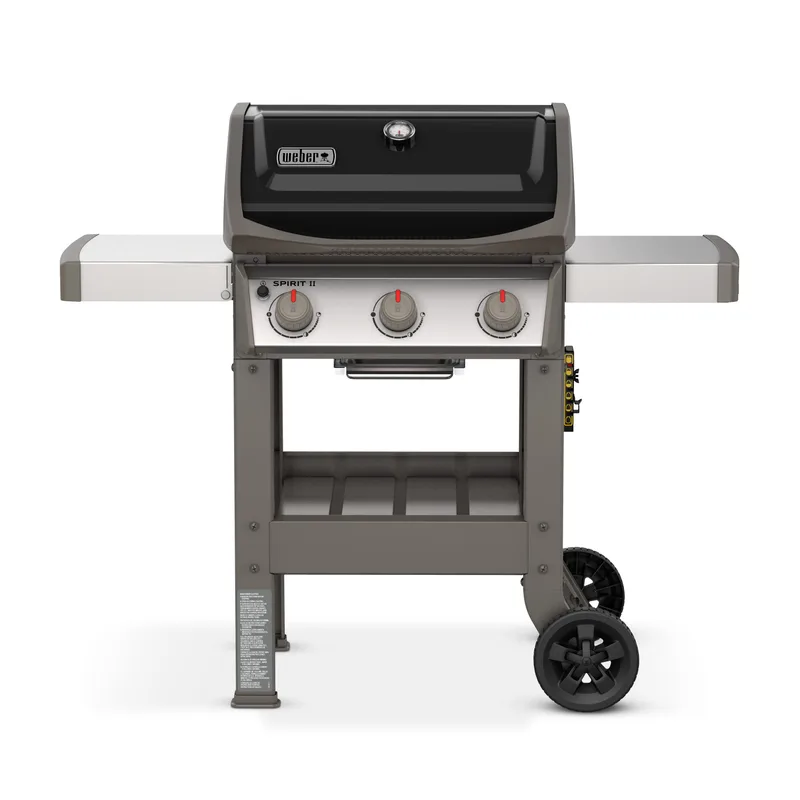
Best Gas Grill: Weber Spirit II E-310
Weber Spirit II E-310 Gas Grill
The Weber Spirit II E-310 represents the ideal entry point for gas grilling. Its 30,000 BTU across three burners handles everything from hot dogs to reverse-seared steaks. The GS4 grilling system includes improved ignition that lights reliably even after years of use.
Weber’s Flavorizer bars vaporize drippings to add some smoke flavor back into your food, partially addressing the flavor gap. Based on owner reviews, this grill consistently performs for 8-10+ years with basic maintenance.
Premium Gas Pick: Weber Genesis II E-335
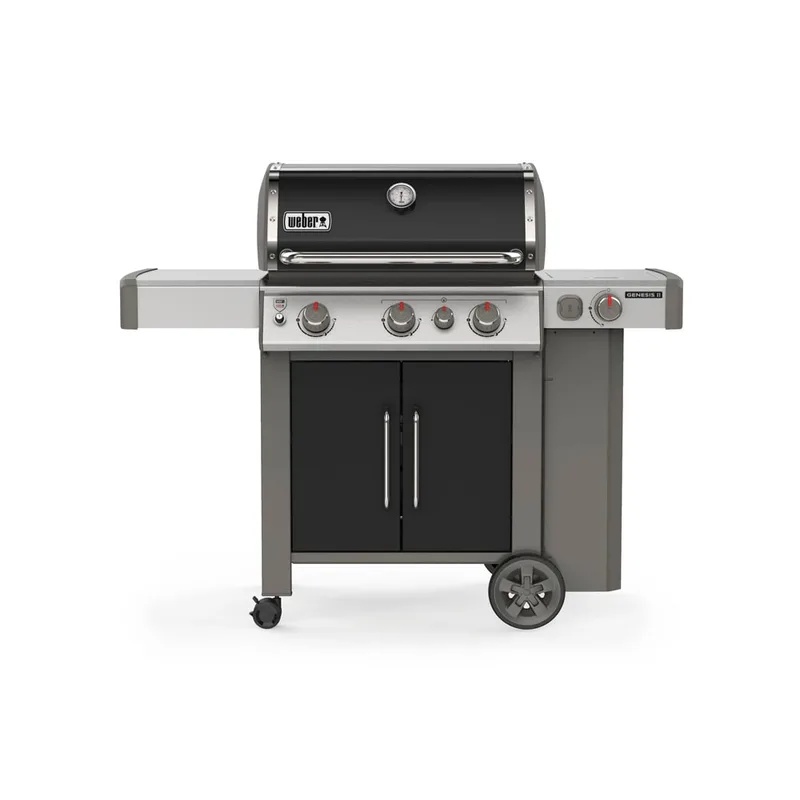
Weber Genesis II E-335
For those wanting more from gas, the Genesis II E-335 adds a dedicated sear station that reaches temperatures rivaling charcoal. The side burner handles sauces and sides without leaving the grill. iGrill compatibility lets you monitor internal temperatures remotely.
Charcoal Grills: The Flavor King
Detailed Pros
Unmatched smoky flavor. Charcoal combustion releases aromatic compounds that penetrate food in ways no other fuel can replicate. Lump charcoal and hardwood briquettes each produce distinct flavor profiles, letting you customize results based on what you are cooking.
Extreme temperature capability. Charcoal grills easily exceed 700F, creating the Maillard reaction (browning) faster than gas or pellet alternatives. This intense heat produces steakhouse-quality crusts on steaks and burgers.
Lower upfront investment. Quality charcoal grills like the Weber Kettle start under $200. Even premium options like ceramic kamado cookers cost less than equivalent gas grills when factoring in installation.
Simplicity and durability. Fewer parts mean fewer failure points. A well-maintained Weber Kettle can last 20+ years. Ceramic kamados regularly outlive their owners.
Detailed Cons
Longer startup time. Plan 15-25 minutes for charcoal to reach cooking temperature. Chimney starters eliminate lighter fluid taste but still require patience. This rules out charcoal for quick weeknight meals.
Steeper learning curve. Temperature control via vent adjustments takes practice. Beginners often overshoot targets or struggle with uneven heat. Expect a few learning experiences before achieving consistent results.
More intensive cleanup. Every session produces ash requiring disposal. Grease and charcoal residue accumulate on grates and fireboxes. Monthly deep cleaning keeps performance optimal.
Weather sensitivity. Wind and cold affect charcoal combustion more than enclosed gas burners. You will use more fuel in winter and may struggle maintaining temperatures on windy days.
Best Charcoal Grill: Weber Original Kettle Premium 22-Inch
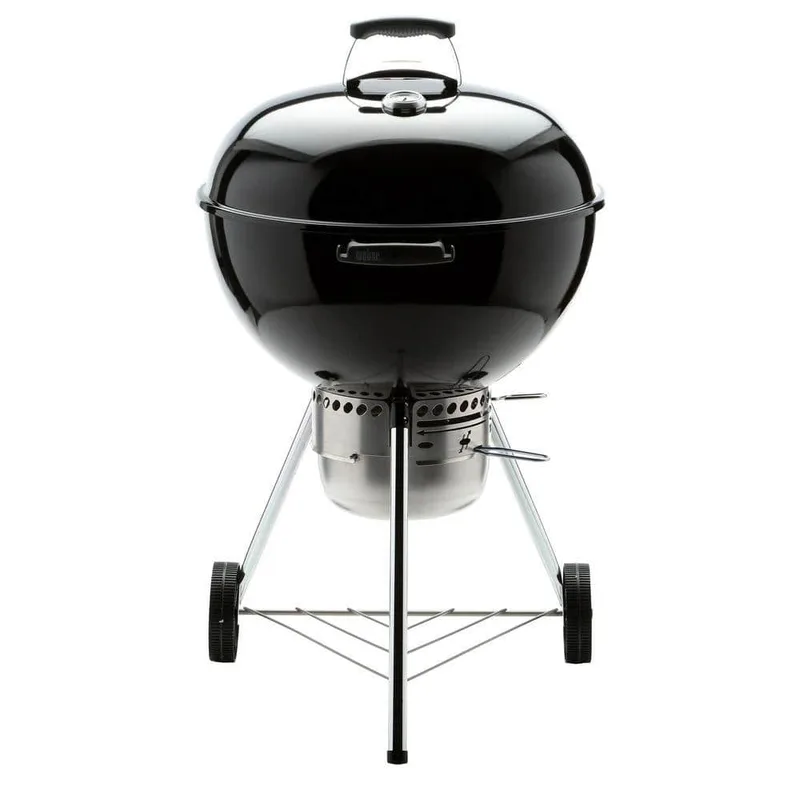
Weber Original Kettle Premium 22-Inch
The Weber Kettle has earned its legendary status over 70+ years of production. The 22-inch cooking surface handles 13 burgers simultaneously. The One-Touch cleaning system sweeps ash into a removable catcher, simplifying the biggest charcoal hassle.
The hinged cooking grate lets you add charcoal mid-cook without removing all your food. Premium models include an aluminum ash catcher and built-in thermometer. At under $200, this remains the best value in outdoor cooking.
Premium Charcoal Pick: Kamado Joe Classic III
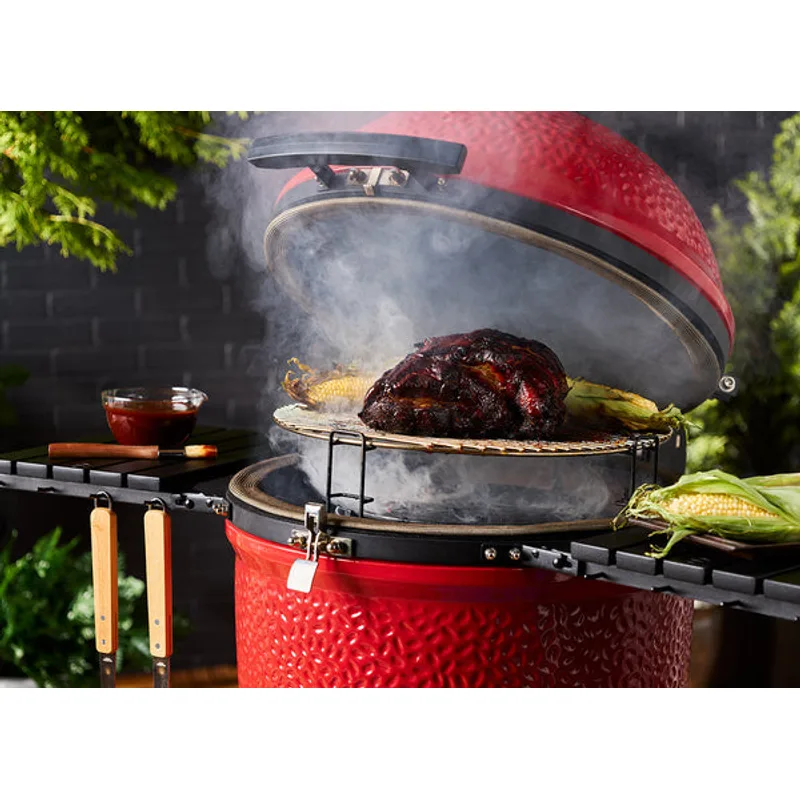
Kamado Joe Classic III
For those willing to invest, the Kamado Joe Classic III transforms charcoal cooking. Ceramic walls retain heat so efficiently that you will use a fraction of the charcoal compared to steel grills. Temperatures hold steady for hours without adjustment.
The versatility is remarkable: sear steaks at 750F, smoke brisket at 225F for 12+ hours, or bake pizza with consistent results. Divide and Conquer racks let you cook at multiple levels simultaneously.
Pellet Grills: The Versatile Innovator
Detailed Pros
Set-and-forget convenience. Digital controllers maintain temperatures within 5-10 degrees automatically. Load pellets, set your target, and the grill handles fuel delivery and fan speed. This automation lets you focus on food rather than fire management.
Genuine wood smoke flavor. Hardwood pellets produce authentic smoke flavor that gas cannot match. Different wood species (hickory, apple, mesquite, cherry) create distinct profiles. The flavor intensity falls between gas and traditional charcoal smoking.
Extreme versatility. Pellet grills grill, smoke, bake, roast, and even braise. Some owners use them as outdoor ovens for bread and pizza. No other single cooker spans this range of techniques effectively.
Connected features. Modern pellet grills include WiFi connectivity and smartphone apps. Monitor temperatures, adjust settings, and receive alerts from anywhere. This technology particularly benefits low-and-slow smoking sessions.
Detailed Cons
Electricity requirement. Pellet grills need power for the auger, fan, and igniter. They will not function during power outages unless you have a generator or battery backup. This limits portability compared to gas or charcoal.
Ongoing pellet costs. Expect to spend $15-25 per 20-lb bag of pellets. Heavy users may burn through $50-100 monthly in pellets. This ongoing cost adds up compared to propane or charcoal over time.
Slower heat response. Pellet grills take 15-20 minutes to reach temperature. They also struggle to achieve the 700F+ temperatures that charcoal reaches easily, limiting searing performance on some models.
Complexity and reliability. More electronic components mean more potential failure points. Auger jams, igniter failures, and controller issues appear in owner reviews more frequently than with simpler gas or charcoal designs.
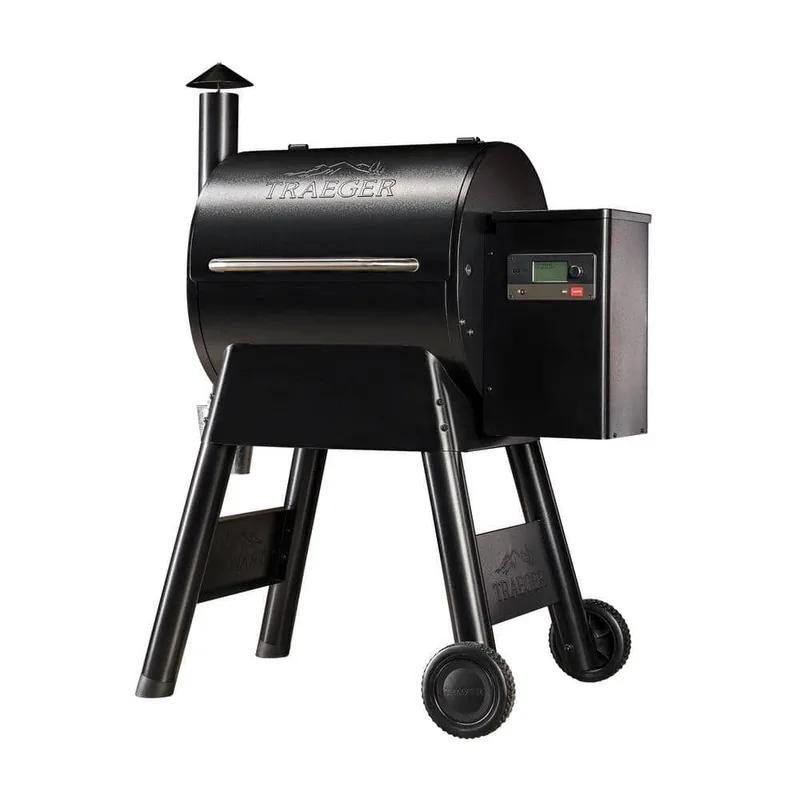
Best Pellet Grill: Traeger Pro 575
Traeger Pro 575 Pellet Grill
Traeger pioneered pellet grilling and the Pro 575 represents their refined vision. D2 Direct Drive provides consistent pellet feed and clean combustion. WiFIRE connectivity lets you control everything from your phone, including monitoring multiple probes.
The 575 square inch cooking surface handles family-sized cooks comfortably. Temperature range spans 175-500F, covering everything from smoking to grilling. Based on owner feedback, this model offers the best balance of features, performance, and Traeger’s extensive support network.
Value Pellet Pick: Camp Chef Woodwind WiFi 24
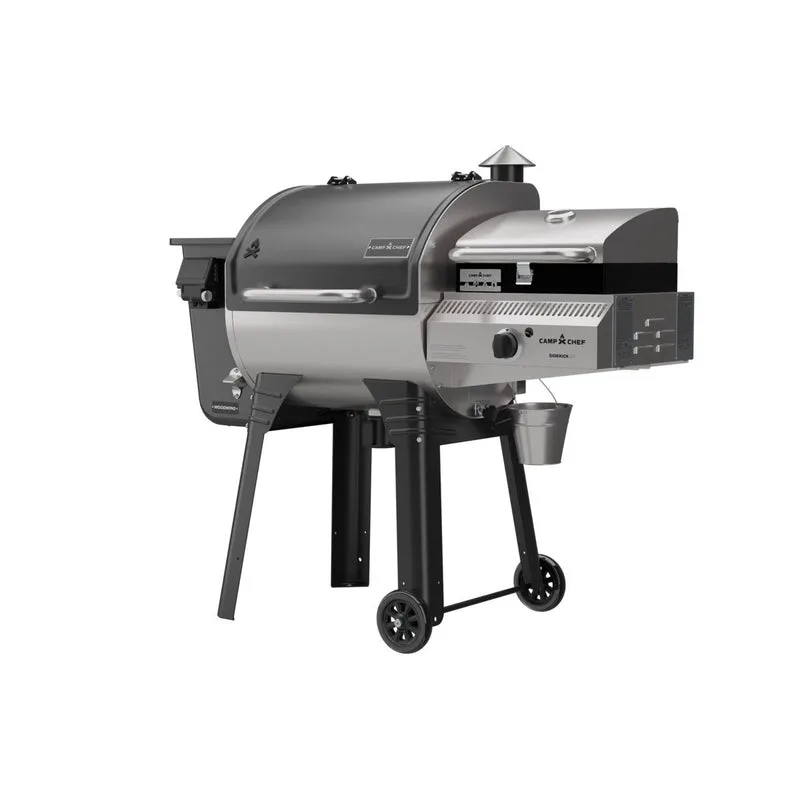
Camp Chef Woodwind WiFi 24
Camp Chef delivers comparable technology at a lower price point. The Slide and Grill feature exposes food to direct flame for better searing than standard pellet grills. WiFi PID control maintains temperatures precisely.
The optional Sidekick attachment adds a gas burner for searing, sauteing, or using a flat top griddle. This modularity addresses pellet grills’ primary weakness while keeping costs reasonable.
Cost Analysis: 5-Year Ownership Comparison
Gas Grill Total Cost
- Initial investment: $500-1,200
- Propane (20 cooks/year at $5/cook): $500 over 5 years
- Replacement parts and maintenance: $100-200
- 5-year total: $1,100-1,900
Charcoal Grill Total Cost
- Initial investment: $150-2,200
- Charcoal (20 cooks/year at $8/cook): $800 over 5 years
- Replacement parts and cleaning supplies: $50-100
- 5-year total: $1,000-3,100
Pellet Grill Total Cost
- Initial investment: $600-1,500
- Pellets (20 cooks/year at $10/cook): $1,000 over 5 years
- Replacement parts and maintenance: $150-300
- 5-year total: $1,750-2,800
Which Grill Should You Buy?
Choose Gas If:
- You value convenience and cook frequently on weeknights
- Precise temperature control matters more than smoky flavor
- You want minimal cleanup and maintenance
- Cold weather grilling is common
- Quick startup time is essential
Choose Charcoal If:
- Authentic smoky flavor is your top priority
- You enjoy the ritual of fire management
- Budget constraints favor lower upfront costs
- You want extreme searing temperatures
- Weekend cooking gives you time for longer sessions
Choose Pellet If:
- You want wood smoke flavor with set-and-forget convenience
- Low-and-slow smoking is a primary use case
- WiFi connectivity and smart features appeal to you
- You cook diverse foods requiring different techniques
- Baking and roasting outdoors interests you
Internal Links
Ready to buy? Check our best gas grills 2026 or best pellet grills 2026 for deeper recommendations. Already know you want built-in? Our built-in grills guide covers permanent installation options.
Whichever you choose, protect it with a quality grill cover and stock up on essential grilling accessories.
Frequently Asked Questions
Which grill produces the best flavor?
Charcoal grills produce the most intense smoky flavor due to direct combustion and dripping vaporization. Pellet grills offer genuine wood smoke flavor with less intensity than charcoal. Gas grills produce the cleanest, most neutral taste. Flavor preference is subjective, so consider what style appeals to you.
What is the cheapest grill fuel over time?
Propane typically costs the least per cook at around $3-5 per session. Charcoal averages $6-10 per session depending on quality and quantity used. Pellets cost $8-12 per session for typical grilling. However, low-and-slow smoking on charcoal or pellets uses significantly more fuel.
Are pellet grills worth the extra cost?
Pellet grills justify their premium for users who value convenience and versatility. If you plan to smoke meats frequently, the automatic temperature control alone saves hours of babysitting. For weekend-only grillers who primarily cook burgers and steaks, a gas or charcoal grill may offer better value.
Can you get smoky flavor on a gas grill?
Yes, but with limitations. Smoker boxes filled with wood chips add some smoke flavor on gas grills. However, the lower temperatures and different combustion chemistry mean you will never achieve the depth of a charcoal or pellet grill. For mild smoke flavor, this works fine. For authentic barbecue, consider other options.
Which grill is best for beginners?
Gas grills offer the gentlest learning curve with instant startup and precise temperature control. Beginners can focus on cooking technique rather than fire management. That said, a simple charcoal kettle teaches fundamental fire skills that transfer to any fuel type. Pellet grills fall in the middle with digital convenience but more complexity.
How long do each type of grill last?
Quality gas grills last 10-15 years with proper maintenance. Charcoal kettles can exceed 20 years due to simple construction. Ceramic kamados often last 25+ years. Pellet grills typically last 8-12 years before significant component failures, though build quality varies significantly by brand.