To clean a grill: preheat it for 10 to 15 minutes, scrape the grates, then do a deeper clean of the burners, flavorizer bars or ash, and grease tray every few weeks. In 2026 there is one more rule: skip the wire-bristle brush. Weber recalled more than 3.2 million wire-bristle grill brushes in February after reports of bristles detaching and being swallowed, and the Consumer Product Safety Commission announced a recall of roughly 1.72 million Cuisinart wire-bristle brushes in July. This guide covers the routine for gas, charcoal and pellet grills, and the bristle-free tools we ranked for the job.
| Spec | GRILLART Bristle-Free Grill Brush and Scraper 9.1/10 | Grill Rescue GB3000 Bristle-Free Steam Grill Brush 8.6/10 | Weber Grill Spray Cleaner and Degreaser, 16 oz 8.8/10 | Goo Gone Grill and Grate Cleaner Spray 8.4/10 | Classic Accessories Veranda Water-Resistant Grill Cover, 64 Inch 8.7/10 |
|---|---|---|---|---|---|
| type | Bristle-free coiled stainless steel | Bristle-free steam brush | — | — | — |
| length | About 17 to 18 inches | — | — | — | — |
| head | Triple helix coil, roughly 6 inches wide | Replaceable cleaning head | — | — | — |
| scraper | Notched metal scraper on the back | — | — | — | — |
| works_on | Gas, charcoal and pellet grates | Gas, charcoal, pellet and flat-top grills | — | — | — |
| Rating | 9.1/10 | 8.6/10 | 8.8/10 | 8.4/10 | 8.7/10 |
Prices change daily — tap Check Price for the current Amazon price.
Prices change daily — tap Check Price for the current Amazon price.
Why the Brush You Use Matters This Year
The recalls changed what a safe grill-cleaning kit looks like. According to the Consumer Product Safety Commission, as reported in coverage of the Weber recall, the small metal wire bristles can detach from the brushes and stick to the grill or food. At least four people reported swallowing bristles and seeking medical treatment. The Weber recall covers metal wire-bristle brushes sold under model numbers 6277, 6278, 6463, 6464, 6493 and 6494, and Weber is offering a nylon cold-cleaning brush as a replacement.
The Cuisinart recall, reported in July, covers about 1,719,995 brushes sold from June 2009 through March 2026. The CPSC documented at least 54 instances of bristles detaching, including three where consumers swallowed bristles and needed medical treatment. Officials suggested replacing wire-bristle brushes with nylon alternatives or bristle-free scrapers.
If you own an older wire-bristle brush from any brand, check the model number against the CPSC recall list before you use it again. Even without a recall, the safest habit is to switch to a bristle-free tool or a scraper and to wipe the grates with a damp cloth or paper towel before you cook.
What You Need Before You Start
Most of the work needs only a few items:
- A bristle-free brush or scraper for the grates
- A grease and grate cleaner for the deeper clean
- A putty knife or plastic scraper for the inside of the lid and firebox
- A bucket of warm, soapy water and a non-abrasive sponge
- Paper towels and a little cooking oil for re-seasoning cast-iron grates
- Disposable gloves for the grease tray and ash cleanout
Do the deep clean with the fuel off and the grill cool. The quick scrape between cooks happens while the grates are hot.
The Quick Clean After Every Cook
This takes about five minutes and prevents most buildup.
- Burn off the residue. After you take the food off, leave the burners on high (gas) or the coals burning (charcoal) for 10 to 15 minutes. Heat turns grease and stuck food into brittle carbon.
- Scrape while the grates are hot. Use a bristle-free brush or scraper and work along the length of the bars. A coiled stainless brush like the GRILLART covers a wide strip per pass.
- Steam clean if you have a steam brush. The Grill Rescue method is to heat the grill to about 400°F, turn off the burners, dunk the brush in water and wipe the grates. The steam loosens grease with no cleaner.
- Wipe with a damp cloth. Once the grates have cooled slightly, wipe them down to catch any leftover residue.
- Oil cast-iron grates. A thin coat of cooking oil keeps bare cast iron from rusting.
Deep Cleaning a Gas Grill
Plan on a full clean every one to three months, and always at the start and end of the season.
- Turn off the gas and disconnect the propane tank. Let the grill cool completely.
- Remove the grates, flavorizer bars (or heat tents) and warming rack. Soak them in warm soapy water, or spray them with a grill cleaner and let it dwell for the time on the label.
- Scrape the inside of the firebox. Use a putty knife to push carbon flakes and grease through the bottom into the drip tray. Flakes inside the lid that look like peeling paint are carbonized grease, so remove them before they fall onto food.
- Clean the burner tubes. Brush along the tubes with a soft nylon brush and clear each port. A bent paper clip works for clogged ports. Check for spider webs in the venturi tubes, a common cause of uneven flames.
- Empty and wash the grease tray. Replace disposable liners. This is the part that matters most for preventing grease fires.
- Rinse, dry and reassemble. Rinse cleaner residue off every surface that touches food, let everything dry, reconnect the tank, and check for gas leaks with soapy water before you light it.
Deep Cleaning a Charcoal Grill
- Wait until the ash is completely cold. Hot embers can stay alive in ash for a day or more.
- Empty the ash catcher. Ash holds moisture and causes rust in the bowl and vents, so remove it after every few cooks.
- Scrub the bowl and lid. Use warm soapy water and a sponge, and scrape any flaking carbon from the inside of the lid.
- Clean the vents. Open and close them to make sure they move freely and are not clogged with ash.
- Clean the grates. Soak them, or spray with a degreaser, then scrape. Dry thoroughly and oil cast iron.
Deep Cleaning a Pellet Grill
Pellet grills add one extra job: ash and grease collect around the fire pot, and pellets that sit in damp air swell and jam the auger.
- Unplug the grill and let it cool. Empty any leftover pellets from the hopper if rain or humidity is expected.
- Vacuum the fire pot and firebox. A shop vacuum pulls out ash that causes ignition problems. Do this every few cooks.
- Scrape the drip tray and heat baffle. Replace foil liners, and clean the grease bucket.
- Clean the grates. Use a bristle-free scraper or brush. Avoid soaking porcelain-coated grates in harsh chemicals.
- Check the grease path. Wipe out the drain tube and make sure grease flows freely to the bucket.
If you own a pellet grill, check the owner manual for the cleaning schedule your model calls for, since fire pot designs differ.
Our Picks for Cleaning Tools
We researched bristle-free tools and grill cleaners based on manufacturer specifications and owner feedback. The order below reflects value, safety and how broadly each product works.
GRILLART Bristle-Free Grill Brush and Scraper
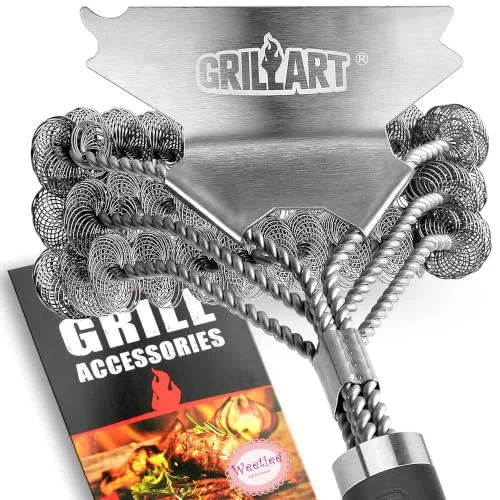
Best overall. This is the tool to buy if you only buy one. It uses a triple-helix coil of stainless steel instead of loose bristles, so there are no wires to snap off. The head is roughly 6 inches wide and the back of the handle has a notched metal scraper made to fit both wire and porcelain-coated grates.
Grill Rescue GB3000 Bristle-Free Steam Brush
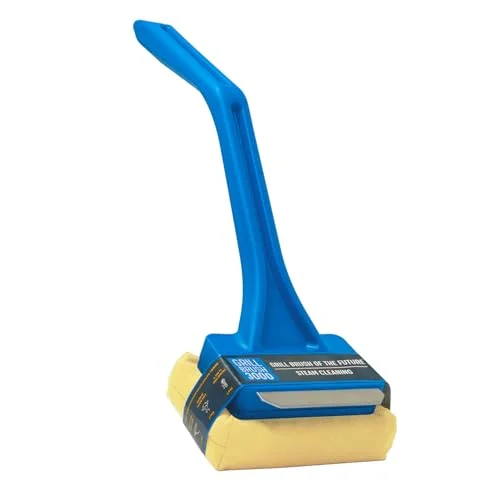
Best steam cleaner. If you would rather clean with water than chemicals, the Grill Rescue head works by steam. Heat the grill, shut off the burners, dunk the brush and wipe. The head is replaceable and the handle is heat-resistant polypropylene. Owner feedback mentions the head connection loosening on some units, so it is worth checking the connection before each use.
Grill Rescue GB3000 Bristle-Free Steam Grill Brush
Weber Grill Spray Cleaner and Degreaser
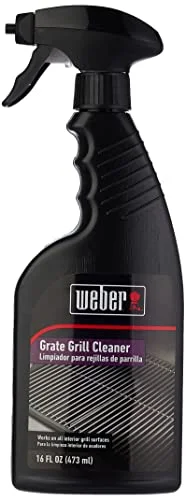
Best brand-matched cleaner. A 16 oz spray for stainless steel, porcelain-enameled and cast-iron grates. Use it for the seasonal deep clean: spray, let it sit, scrape and rinse. It is a good fit for owners of Weber gas grills, though it is not limited to them.
Weber Grill Spray Cleaner and Degreaser, 16 oz
Goo Gone Grill and Grate Cleaner Spray
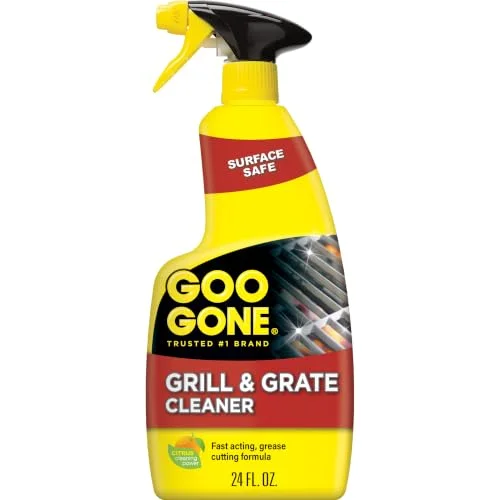
Best for heavy grease. Goo Gone lists cast iron, porcelain, stainless steel, enamel and drip pans as safe surfaces, and says its biodegradable formula reduces smoke and flare-ups. That makes it the better choice for the grease tray and firebox, where grease is thickest.
Classic Accessories Veranda Grill Cover, 64 Inch

Best for keeping it clean. A cover will not replace cleaning, but it keeps pollen, leaves and rain off the grates between cooks. The Gardelle fabric is water-resistant, mesh vents let moisture escape to slow mildew, and click-close straps hold it down in wind. See our full grill cover roundup if your grill is larger or smaller than 64 inches.
Classic Accessories Veranda Water-Resistant Grill Cover, 64 Inch
Common Grill Cleaning Mistakes
- Using a worn wire-bristle brush. Replace or retire it, and check recall lists first.
- Cleaning a cold grill only. Hot grates scrape far easier than cold ones. Do both: scrape hot, deep clean cold.
- Leaving cleaner residue on the grates. Rinse every surface that touches food.
- Skipping the grease tray. Built-up grease is the main fuel for grill fires.
- Soaking porcelain grates in harsh cleaners. Check the label for your grate material first.
- Storing the grill damp and uncovered. Moisture breeds rust and mildew. Dry it, then cover it.
- Forgetting the lid. Flaking carbon on the underside lands on food.
Seasonal Timing
Clean the grill before the first cookout of spring and again before you cover it for winter. Greasy residue left through a cold season attracts pests and speeds rust. If you cook year-round, a deep clean every one to three months and a tray cleanout after heavy grease cooks is a reasonable rhythm. Pair this with our guide to choosing the right grill type if you are deciding between fuel types, since gas, charcoal and pellet grills each have a different cleaning load. If you cook on a griddle, our flat-top griddle roundup covers the cleaning tools that suit steel plates.
FAQ
How often should I clean my grill?
Scrape the grates after every cook, empty the grease tray every few cooks, and do a full deep clean every one to three months. A heavily used grill or one that cooks fatty meats needs the shorter interval.
Is it safe to use a wire grill brush?
Wire-bristle brushes have been the subject of multiple 2026 recalls because bristles can detach and end up in food. The safer options are bristle-free brushes, nylon cold-cleaning brushes used on cool grates, or a plain scraper. If you keep a wire brush, inspect it often and check recall lists.
What is the best way to clean grill grates?
Burn off residue with high heat, then scrape the grates while they are hot using a bristle-free tool. For built-up grease, remove the grates and use a grill cleaner or soapy water, then rinse and dry. Oil cast-iron grates afterward.
Can I use oven cleaner on my grill?
Only if the label says it is safe for grills. Some oven cleaners can damage porcelain finishes and some leave residue you do not want near food. Grill-specific cleaners list the surfaces they are safe on, so those are the better choice.
How do I clean the inside of the lid?
Let the grill cool, then use a plastic scraper or putty knife to remove flaking carbon, followed by warm soapy water and a sponge. Flakes that look like peeling paint are baked-on grease, so clearing them keeps them off your food.
Does a grill cover really help?
A cover keeps rain, pollen and debris off the grates and slows rust and mildew. Choose one with air vents so trapped moisture can escape.
The Bottom Line
Clean the grates after each cook and do a full deep clean every one to three months. Because of this year’s wire-brush recalls, the GRILLART Bristle-Free Grill Brush and Scraper is the simplest upgrade for most owners, and the Grill Rescue GB3000 is the pick if you want a chemical-free steam clean. Add a grill spray like the Weber Spray Cleaner or Goo Gone for the seasonal deep clean, and keep the grill under a vented cover between cooks.