A pellet grill is worth it if you want to smoke brisket, ribs, or pork shoulder without babysitting a fire, and you cook that way at least a couple of times a month. It is not worth it if your cooking is mostly weeknight burgers, because a gas grill heats faster and sears harder. This guide covers who benefits, what the real trade-offs are, and which models fit each situation.
| Spec | Traeger Westwood Wood Pellet Grill & Smoker 8.6/10 | Pit Boss Navigator 850 WiFi & Bluetooth Wood Pellet Grill 8.9/10 | Traeger Woodridge Pro Wood Pellet Grill & Smoker 9/10 | Traeger Ironwood 885 Wood Pellet Grill & Smoker 9.2/10 | ThermoWorks Thermapen ONE Instant-Read Thermometer 9.7/10 |
|---|---|---|---|---|---|
| cooking_area | 653 sq in (dual-tier) | 932 sq in | 970 sq in (585 primary + 385 secondary) | 885 sq in (main rack + second-tier rack) | — |
| temperature_range | 180-450°F | 180-500°F (flame broiler sears to 1,000°F) | 180-500°F | 165-500°F | — |
| hopper_capacity | 18 lb | 30 lb | 24 lb, EZ-Clean cleanout | 20 lb | — |
| smart_features | WiFIRE app control | WiFi + Bluetooth, LCD digital controller | WiFIRE app control, Super Smoke Mode | WiFIRE app control, Super Smoke Mode, D2 direct drive controller | — |
| assembled_weight | 151 lb | 175 lb | 174 lb | — | — |
| warranty | 7-year limited | 5-year limited | 10-year limited | 3-year limited | — |
| Rating | 8.6/10 | 8.9/10 | 9/10 | 9.2/10 | 9.7/10 |
Prices change daily — tap Check Price for the current Amazon price.
Prices change daily — tap Check Price for the current Amazon price.
Quick Picks
- Best value overall: the Pit Boss Navigator 850, for the 30 lb hopper and 1,000°F flame broiler sear.
- Lowest-risk way to try pellet cooking: the Traeger Westwood, with WiFIRE and a 7-year warranty at the brand’s lowest entry point.
- Best for big cooks and long ownership: the Traeger Woodridge Pro, with 970 sq in and a 10-year warranty.
What a Pellet Grill Actually Does Differently
A pellet grill feeds compressed hardwood pellets from a hopper into a firepot with an auger. A fan and a digital controller adjust the feed rate to hold the temperature you set, and a diffuser plate or drip tray keeps the fire from touching the food directly. In practice, you set 225°F, close the lid, and the grill maintains it for hours.
That automation is the whole pitch. A charcoal smoker needs you to adjust vents and add fuel. A gas grill has no wood smoke at all unless you add a smoker box. A pellet grill combines wood flavor with set-and-forget control, which is why Wi-Fi models from Traeger and Pit Boss let you check and change temperature from a phone.
This guide is based on spec sheets, manufacturer data, and owner feedback.
Who Gets the Most Out of One
You are the best fit if you meet most of these:
- You like low-and-slow food. Brisket, pulled pork, ribs, and whole chickens are where a pellet grill earns its keep. Cooks that run 8 to 14 hours are far less work when the grill manages its own fuel.
- You want a less demanding smoker. The learning curve is gentler than offset or charcoal smokers. If you are weighing options for a first smoker, our beginner smoker roundup compares the alternatives.
- You have somewhere to put it. Even the most compact grill here weighs 151 lb assembled, and the Woodridge Pro is 67 inches wide.
- You can tolerate a power requirement. Every pellet grill needs an outlet for the auger, fan, and controller. A power outage or a patio without an outlet within cord reach ends the cook.
Who Should Skip It
Pellet grills are a poor match in these situations:
- You mostly grill fast, hot food. Most pellet grills top out at 450 to 500°F. Gas reaches higher and heats in minutes. See our gas grill picks if that sounds like you.
- You want the strongest possible smoke flavor. Pellet smoke is milder than what a stick burner or a charcoal-and-wood setup produces. Owners often describe the flavor as clean rather than intense.
- You want the lowest price. Pellet grills cost more than comparable charcoal and entry-level gas grills, and the pellets are an ongoing expense. A charcoal grill delivers real wood-fire flavor for far less up front.
- You cannot stand maintenance. Ash and grease build up in the firepot and drip tray, and neglected grills can have ignition or feed problems.
For a three-way comparison of fuel types, see gas vs. charcoal vs. pellet grills.
The Real Costs Beyond the Grill
The sticker price is only part of it. Budget for these:
- Pellets. Each cook burns through a hopper’s worth or more, and long smokes at low temperatures use less than short, hot cooks. Hardwood pellets are sold by the bag, so a habit of frequent smoking adds up over a season.
- A cover. Pellet grills have electronics and a hopper that must stay dry. Damp pellets swell and jam the auger. Our grill cover guide covers materials, but check fit for your specific model.
- A reliable thermometer. The built-in probe tells you what the grill thinks is happening. An instant-read thermometer confirms the food is actually done.
- Electricity. Draw is modest, but you need an outdoor-rated outlet or a weather-rated extension cord.
What to Look For Before You Buy
Cooking Area
Cooking area is measured in square inches, and it includes secondary racks. The Westwood offers 653 sq in across two tiers, enough for a family cook. The Woodridge Pro offers 970 sq in. If you regularly cook for 10 or more people, size up; if it is just your household, extra area is wasted pellets and wasted space.
Maximum Temperature and Searing
Most pellet grills stop at 450 to 500°F. The Pit Boss Navigator 850 adds a flame broiler slide that exposes food to direct flame for searing up to 1,000°F, which makes it the best option here if you also want to cook steaks. Without a sear feature, plan to finish steaks in a cast iron pan or on a separate grill.
Hopper Size
A bigger hopper means fewer refills on overnight cooks. The Navigator’s 30 lb hopper is the largest here. The Westwood’s 18 lb hopper is the smallest, which is fine for typical weekend cooks but needs watching on 12-hour smokes.
App and Connectivity
Wi-Fi is useful for checking temperature without leaving the house. Traeger’s WiFIRE has the stronger reputation for app polish and reliability, while Pit Boss’s app trails it, per owner reports. If you do not care about remote monitoring, you can save money with a non-Wi-Fi model.
Pellet Quality and Flavor
Pellets come in single-wood and blended varieties, such as hickory, apple, mesquite, and cherry. Pure hardwood pellets with no fillers or flavor oils burn cleaner and leave less ash. Stronger woods like hickory and mesquite suit beef and pork, while apple and cherry are gentler and suit poultry and fish. Because the smoke is mild, switching pellet type is the main way you change flavor on a pellet grill.
Assembly and Space
Plan on a large carton and a second person for lifting; owners generally report a couple of hours of assembly. At 151 to 175 lb assembled, plan the final spot before you build it, with clearance from siding, railings, and overhangs. Keep it on a level, non-combustible surface such as pavers or concrete rather than a wooden deck without a protective pad.
Warranty
Warranties range from 3 years on the Ironwood to 10 years on the Woodridge Pro. Pellet grills have more moving and electronic parts than gas or charcoal grills, so longer coverage is worth weighing. Also consider weather: the controller and hopper are the parts most sensitive to moisture and damp climates.
Our Picks if You Decide to Buy
Lowest-Risk Entry: Traeger Westwood

The Traeger Westwood is the grill to consider if you are curious about pellet cooking but unsure you will use it enough. It has the lowest price of any WiFi-connected Traeger, the 653 sq in cooking area is enough for most households, and the 7-year limited warranty is a meaningful safety net. The trade-off is the 450°F ceiling and 18 lb hopper, plus a short track record because it only launched in April 2026.
Best Value Overall: Pit Boss Navigator 850
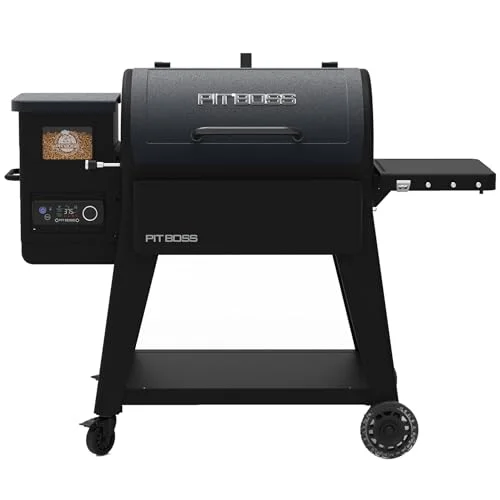
The Pit Boss Navigator 850 gives you the most capability for the money. A 932 sq in cooking area, 30 lb hopper, and flame broiler for 1,000°F searing mean it handles both a 12-hour brisket and a steak dinner. It weighs 175 lb assembled, and the app is less refined than Traeger’s, but for most buyers the sear option decides it.
For Big Cooks and Long Ownership: Traeger Woodridge Pro
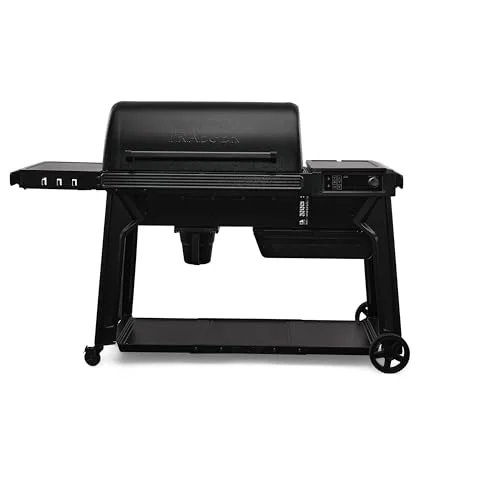
The Traeger Woodridge Pro has 970 sq in of cooking area, a 24 lb hopper, and a 10-year limited warranty. The EZ-Clean grease and ash keg addresses the maintenance complaint that pushes some owners away from pellet grills. At 67 inches wide it needs real space, so measure your deck first, and our patio measuring guide explains how to plan clearances.
For Smoke Flavor: Traeger Ironwood 885
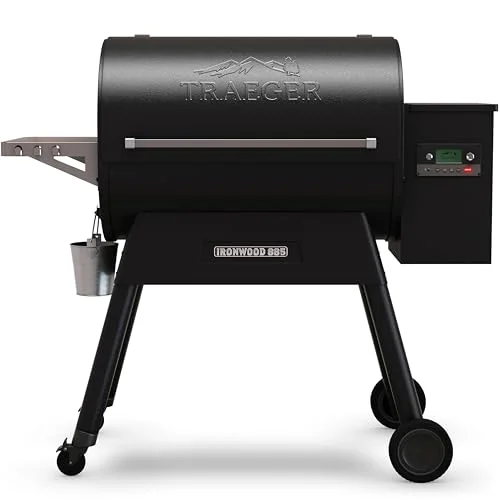
The Traeger Ironwood 885 is built around Super Smoke Mode and the D2 direct drive controller. It is the pick if low-and-slow flavor is the point and you do not need extreme sear temperatures. Its 3-year warranty is the shortest here, which stings at its price.
The Accessory That Matters Most: ThermoWorks Thermapen ONE

Whichever grill you buy, an accurate instant-read thermometer is the one accessory that changes outcomes. The ThermoWorks Thermapen ONE reads in about one second with plus or minus 0.5°F accuracy, so you can check several spots on a brisket quickly. For other add-ons, see our grill accessories roundup.
For a full ranked list, including budget through premium models, see best pellet grills of 2026, and for a head-to-head of the two biggest brands, see Traeger vs. Pit Boss.
Common Mistakes When Buying a Pellet Grill
- Buying for the maximum cooking area you might ever need. Oversized grills use more pellets to heat and take more space. Size for your normal cook.
- Expecting gas-grill searing. If steaks are a priority, choose a model with a direct-flame sear option or plan to sear elsewhere.
- Ignoring where the power comes from. Confirm an outlet is within reach before you order.
- Leaving pellets exposed. Pellets absorb moisture and swell. Keep unused pellets in a sealed container and keep the hopper covered between cooks.
- Skipping cleanout. Ash and grease buildup is the most common cause of temperature swings and ignition problems, so schedule cleanouts after several cooks.
- Trusting only the built-in probe. Verify doneness with a separate thermometer.
FAQ
Is a pellet grill worth it compared to a gas grill?
It depends on what you cook. Pellet grills are better for smoking and for long, low-temperature cooks with wood flavor. Gas grills are better for fast weeknight cooking and high-heat searing. Many owners keep both.
Are pellet grills expensive to run?
Pellets are the main running cost, and consumption depends on temperature and weather. Low-temperature smoking uses fuel more slowly than high-heat cooking. Cold or windy conditions make the grill burn more pellets to hold temperature.
Can a pellet grill sear a steak?
Most max out at 450 to 500°F, which gives a decent but not steakhouse-level sear. The Pit Boss Navigator 850 is the exception in this guide, with a flame broiler slide that exposes food to direct flame for temperatures up to 1,000°F.
Do pellet grills work in cold weather?
They run, but they consume more pellets and take longer to preheat when temperatures drop. An insulating blanket made for your specific model and a spot sheltered from wind help. See our winter patio guide for protecting outdoor gear in cold months.
How much maintenance does a pellet grill need?
Plan to wipe grease from the drip tray and vacuum ash from the firepot regularly, with a deeper clean after several cooks. Models like the Woodridge Pro with an EZ-Clean keg make this quicker.
Do I need Wi-Fi on a pellet grill?
No. It lets you monitor and adjust temperature from your phone, which helps on overnight smokes, but the grill cooks the same without it. If remote monitoring is not important, a non-Wi-Fi model can cost less.
The Bottom Line
A pellet grill is worth it if you smoke regularly and want wood flavor without tending a fire, and it is a poor choice if you mostly cook quick, hot meals. For most first-time buyers the Pit Boss Navigator 850 offers the best mix of capacity and searing, the Traeger Westwood is the lower-risk way to try pellet cooking, and the Traeger Woodridge Pro suits big cooks and buyers who value a 10-year warranty. Whichever you choose, add a ThermoWorks Thermapen ONE and a cover to protect the electronics.
Related reading: Best Pellet Grills in 2026 | Traeger vs. Pit Boss | Gas vs. Charcoal vs. Pellet Grills