Your climate matters more than your budget when picking patio furniture. A set that shrugs off a Phoenix summer can rust within a year on Cape Cod, and a bench built for Seattle rain can crack in Arizona’s dry heat. The short version: cast aluminum for coastal and windy areas, HDPE lumber for snow and freeze-thaw, teak for hot and dry regions, PE wicker for humid rain, and breathable Textilene mesh for poolside heat and chlorine.
| Spec | Christopher Knight Home Hallandale Cast Aluminum Dining Set (5-Piece) 8.8/10 | POLYWOOD Vineyard Adirondack Chair 9.2/10 | Sunnydaze Wooden Outdoor Teak Bench with Backrest 8.9/10 | Rilyson 5-Piece Wicker Patio Furniture Set with Ottomans 8.6/10 | PHI VILLA Swivel Patio Dining Chairs, Set of 2 8.5/10 | RSH DECOR Sunbrella Deep Seating Cushion Set with Pillow Back 8.7/10 |
|---|---|---|---|---|---|---|
| material | Rust-resistant cast aluminum, hammered bronze powder coat | HDPE (high-density polyethylene) lumber, Slate Grey | Natural teak wood, stain finish | PE rattan wicker over powder-coated steel frame | Textilene mesh fabric, black E-coated steel frame | Sunbrella solution-dyed acrylic fabric |
| pieces | 5-piece: table + 4 chairs | — | — | 2 swivel rocking chairs, 2 ottomans, 1 side table | — | — |
| table_dimensions | 39.37"L x 39.37"W x 29.53"H | — | — | — | — | — |
| total_weight | 60.49 lbs | — | — | — | — | — |
| seating | Seats 4, umbrella hole built in | — | — | — | — | — |
| Rating | 8.8/10 | 9.2/10 | 8.9/10 | 8.6/10 | 8.5/10 | 8.7/10 |
Prices change daily — tap Check Price for the current Amazon price.
Prices change daily — tap Check Price for the current Amazon price.
Why Climate Should Drive the Material Decision, Not Style
Most furniture shopping starts with a look — modern aluminum, cottage-style wicker, classic teak — and treats durability as an afterthought. That order should flip. The same wicker set that looks perfect in a showroom photo can develop black mold spots in a humid Gulf Coast summer, while the cast aluminum set built to survive salt air can feel cold and impersonal in a dry mountain climate where wood belongs.
Retailers publishing 2026 buying guides for coastal and humid regions consistently point to the same short list of materials that hold up outdoors without heavy maintenance: powder-coated aluminum, HDPE composite lumber, resin/PE wicker on aluminum frames, and naturally oily hardwoods like teak. Everything else — regular steel, natural wicker, untreated softwood — needs either heavy maintenance or a covered space to survive more than a season or two.
Coastal and Salt-Air Climates
Salt air is more corrosive than plain humidity. It settles into any exposed metal seam or scratch and accelerates rust far faster than rain alone. The two materials that hold up are aluminum, which forms a protective oxide layer instead of rusting, and HDPE lumber, which has nothing for salt to corrode in the first place.
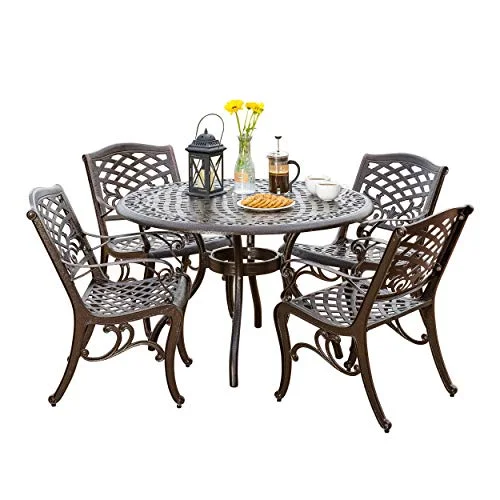
Christopher Knight Home Hallandale Cast Aluminum Dining Set (5-Piece)
The Christopher Knight Home Hallandale Cast Aluminum Dining Set is built for exactly this environment. Cast aluminum doesn’t rust the way steel does, and the hammered bronze powder coat adds a second layer of protection against chipping. Just as important for oceanfront patios: at roughly 60 lbs total, the set has enough mass to stay put through onshore wind gusts that would send lighter stamped-aluminum furniture tumbling across the deck.
Rinse salt residue off with a garden hose every few weeks during peak season — salt left to dry on any surface, including aluminum, eventually dulls the powder coat’s finish even though it can’t cause structural rust. A Parker & Bailey Patio Furniture Cleaner Spray handles the salt film and adds UV protectant in the same pass.
Snow, Freeze-Thaw, and Cold-Winter Climates
Furniture left outside through a northern winter goes through dozens of freeze-thaw cycles. Any material that absorbs even small amounts of moisture — untreated wood, low-grade resin, regular steel — expands as that moisture freezes and contracts as it thaws, which is how cracks and rust spots start.
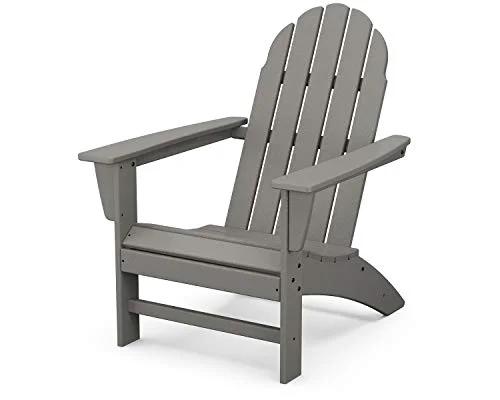
POLYWOOD Vineyard Adirondack Chair
HDPE lumber, sold mainly under the POLYWOOD brand, sidesteps the problem entirely because it doesn’t absorb water at all. The POLYWOOD Vineyard Adirondack Chair carries a 20-year residential warranty specifically because the material doesn’t crack, splinter, or rot through repeated freezing. Its color runs solid through the material rather than sitting as a surface coating, so even a stray scrape from moving it across an icy deck won’t reveal a different color underneath.
For furniture that has to stay outside all winter in a snow-load climate, HDPE and powder-coated aluminum are the two materials that need no seasonal storage plan. Everything else — including cast aluminum’s own cushions — should come inside once nightly lows start dropping toward freezing.
Hot, Dry, and High-UV Climates
Dry heat is deceptively hard on furniture. Without humidity to keep wood fibers from drying out too fast, cheaper woods and low-grade plastics crack under UV exposure faster than they would in a milder climate. Teak is the exception because its natural oil content keeps the wood from drying out the way untreated lumber does.
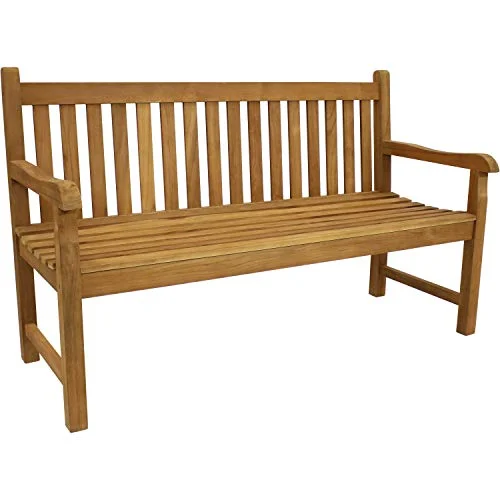
Sunnydaze Wooden Outdoor Teak Bench with Backrest
The Sunnydaze Wooden Outdoor Teak Bench holds a 600 lb weight capacity and needs nothing beyond an annual oiling if you want to preserve its honey-gold color; skip the oiling and it weathers to a silver-gray patina that’s cosmetic, not structural. Either way, teak’s dense grain resists the surface checking (small parallel cracks) that lower-density woods develop under sustained dry heat and UV.
Aluminum also performs well in dry, hot climates since it doesn’t absorb moisture to begin with, but it can get uncomfortably hot to the touch in direct desert sun — teak and HDPE both stay closer to ambient temperature. If you want to keep the honey-gold color instead of letting it gray, Nordicare Teak Oil for Outdoor Furniture is formulated for the fast drying-out that dry climates cause.
Humid and Rainy Climates
Humidity without direct salt exposure — think the Southeast, the Ohio Valley, or the Pacific Northwest — is really a mildew and mold problem more than a corrosion problem. Any material or fabric that traps moisture against itself, rather than shedding it, eventually grows something you don’t want to sit on.
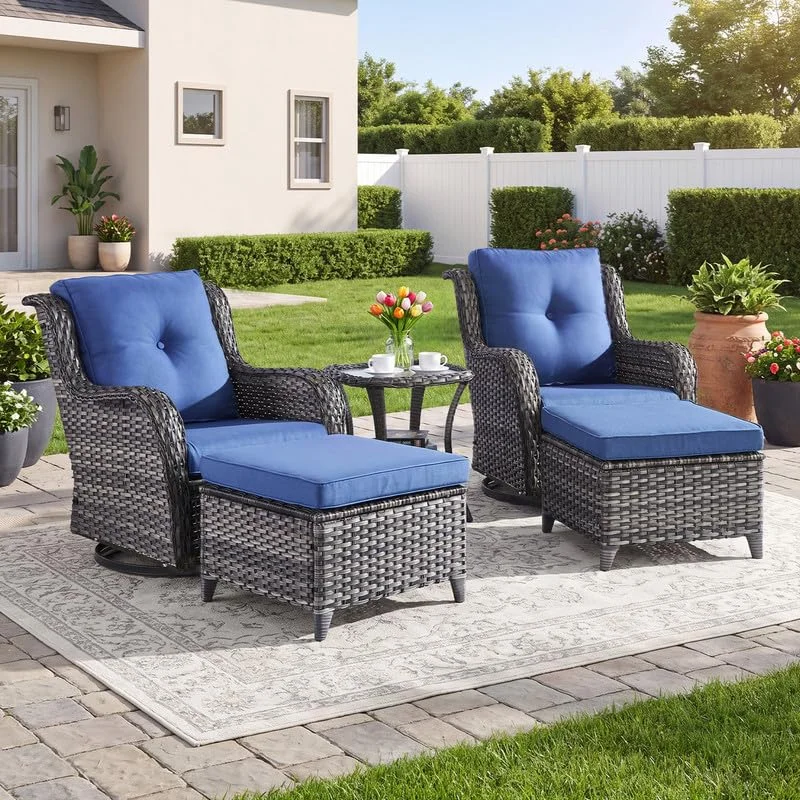
Rilyson 5-Piece Wicker Patio Furniture Set with Ottomans
The Rilyson 5-Piece Wicker Patio Furniture Set uses PE (polyethylene) rattan wicker rather than natural rattan, so the weave itself can’t absorb water and rot the way real rattan does indoors-only. The cushions use water-repellent polyester with zippered, removable covers, which matters more in humid climates than in dry ones — being able to pull covers off and hose or wash them down before mildew sets in is the real defense, not just water-repellent fabric on its own.
The one weak point on any wicker set, including this one, is the steel frame hiding under the weave. Check the underside periodically for chipped powder coating, since that’s where rust starts even on furniture that looks fine from the top.
Hot and Humid Poolside Climates
Poolside furniture deals with three stresses other patio furniture doesn’t: constant splash exposure, chlorine or saltwater pool chemicals, and near-daily wet-dry cycling as swimmers get in and out. Sling and mesh designs exist specifically for this environment because an open weave sheds water instead of holding it against the seat.
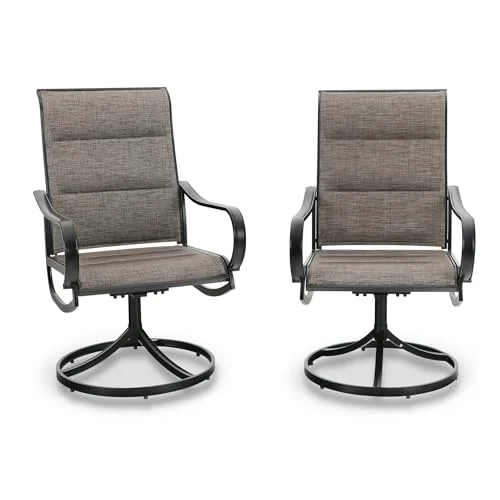
PHI VILLA Swivel Patio Dining Chairs, Set of 2
The PHI VILLA Swivel Patio Dining Chairs use Textilene mesh — a woven, breathable fabric that dries in minutes rather than staying damp for hours the way a padded cushion would. The E-coated steel frame adds a rust-resistant layer that matters specifically around pool decks, where chemical splash accelerates corrosion on bare or lightly coated metal faster than plain rainwater does.
Rinse chairs with fresh water after heavy chlorine or saltwater pool splash exposure — chemical residue left to dry on any metal frame, coated or not, shortens its finish life over a full swim season.
The Universal Upgrade: Fabric Matters as Much as Frame
Frame material gets most of the attention in climate-based buying advice, but cushion and sling fabric fails faster than any frame in almost every climate. A weather-appropriate aluminum or HDPE frame paired with cheap printed outdoor fabric still ends up with faded, mildewed cushions within two seasons.
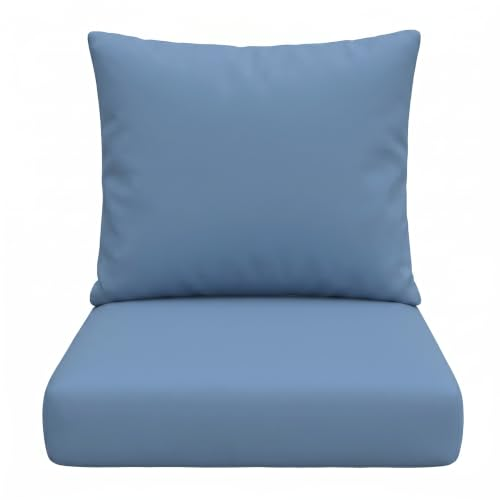
RSH DECOR Sunbrella Deep Seating Cushion Set with Pillow Back
Solution-dyed acrylic fabric like Sunbrella is the fix, because the color runs through each fiber rather than sitting on top as a print, so fading happens far more slowly under UV exposure. The RSH DECOR Sunbrella Deep Seating Cushion Set works as a standalone upgrade for furniture you already own — swapping fabric on a structurally sound frame is cheaper than replacing the whole piece once cushions fade or mildew. A STAR BRITE Outdoor Furniture Protectant Spray extends that fade resistance on frames and fabric alike between deep cleanings.
Matching Furniture to Your Specific Region
Florida, Gulf Coast, coastal Carolinas: Cast or powder-coated aluminum frames with Sunbrella or Textilene fabric. Avoid natural wicker and regular steel entirely.
Southwest desert (Arizona, Nevada, inland California): Teak or HDPE for frames; aluminum works but gets hot to the touch. Prioritize UV-stabilized fabric over budget printed cushions.
Upper Midwest and Northeast: HDPE lumber or powder-coated aluminum for anything staying outside year-round. Store cushions and non-weatherproof pieces indoors once freezing nights become regular.
Pacific Northwest and humid Southeast: PE wicker on aluminum frames, or straight aluminum, with water-repellent, quick-dry cushion fabric. Check frames periodically for coating damage where mildew and rust both start.
Pool decks anywhere: Textilene or PVC-coated sling fabric on aluminum or E-coated steel frames, rinsed regularly to clear chemical residue.
Common Mistakes When Buying for Climate
Choosing style before material. Decide on cast aluminum, HDPE, teak, or PE wicker based on your climate first, then narrow down by style within that material — not the other way around.
Assuming “outdoor” furniture is climate-agnostic. A tag that says “outdoor” or “all-weather” doesn’t mean it performs the same in Phoenix as it does in Miami. Read the specific material, not just the marketing label.
Ignoring the frame under wicker or cushioned furniture. Wicker weave and cushion fabric get all the visual attention, but the steel or aluminum frame underneath determines whether the piece survives structurally. Always check what the frame is made of, separate from the covering.
Skipping fabric upgrades on an otherwise good frame. A weather-appropriate frame with faded, mildewed budget cushions still looks and feels worn. Solution-dyed fabric is a smaller investment than a full furniture replacement.
Not adjusting maintenance to climate. Teak in a dry climate needs different care than teak in a humid one; aluminum near salt water needs rinsing that aluminum inland doesn’t. Match the maintenance routine to where the furniture actually sits, not a generic care sheet.
FAQ
What’s the single best material for coastal patio furniture?
Powder-coated or cast aluminum. It doesn’t rust the way steel does, and it handles salt spray better than most woods and all natural fibers. HDPE lumber is a close second since salt has nothing on it to corrode.
Does patio furniture really need to match my specific climate?
Yes, more than style does. A material that performs well in one climate can fail within a season or two in another — wicker that thrives in dry heat can mildew in humidity, and wood that’s fine in humid climates can crack in dry desert sun without enough moisture in the air to keep it from drying out too fast.
Is teak worth the extra cost in a dry climate?
For a hot, dry region, yes — teak’s natural oils keep it from drying and cracking the way lower-density woods do under constant UV and low humidity. In a humid climate, teak still performs well, but HDPE or aluminum require less ongoing maintenance for similar durability.
Can I use the same furniture material for snow and coastal climates?
HDPE lumber and powder-coated aluminum both work in either environment, which is why they show up as recommendations across nearly every climate zone in this guide. Teak and PE wicker are better suited to one or the other rather than both extremes.
How often should I rinse patio furniture in a coastal or poolside climate?
Every few weeks during peak season for general salt or chlorine residue, and after any storm surge, heavy splash, or ocean spray event. Dried salt or chemical residue left on a finish — even a rust-resistant one — shortens the life of the coating faster than the residue itself causes damage.
Will Sunbrella fabric outlast the frame it’s attached to?
Often not by itself — solution-dyed Sunbrella typically holds color for 8-10+ years with normal exposure, which can outlast budget steel frames but generally matches or trails a quality aluminum or HDPE frame’s lifespan. Pairing Sunbrella fabric with a climate-appropriate frame gets the most life out of both.
The Bottom Line
Match the frame material to your climate first, then the fabric. Coastal and windy regions call for the Christopher Knight Home Hallandale Cast Aluminum Dining Set, snow and freeze-thaw climates favor the POLYWOOD Vineyard Adirondack Chair, and hot, dry regions get the most life out of the Sunnydaze Wooden Outdoor Teak Bench. Humid, rainy climates do best with PE wicker like the Rilyson 5-Piece Wicker Patio Furniture Set, while pool decks and hot, humid areas favor breathable mesh like the PHI VILLA Swivel Patio Dining Chairs. Whatever frame you land on, a Sunbrella cushion upgrade protects the investment in every climate on this list.
Related guides: Outdoor Furniture Materials Explained | Best Patio Furniture in 2026: The Complete Buyer’s Guide | How to Protect Outdoor Furniture Through Winter