A boil-water notice is not a long outage. It is a few days, sometimes a week, where the tap still runs but you are told not to drink what comes out. A power outage after a storm can leave you with the opposite problem: the tap is dead and the only water is what you stored plus whatever you can scrape from a rain barrel or a pool. A filter helps in both. For most households the best setup is a Sawyer Mini or Squeeze for each person’s go-bag, plus one gravity system like the Platypus GravityWorks for the whole family, and none of them replaces stored water or the instructions on your utility’s notice.
This guide ranks four filters for the situation most readers actually face: three to five days at home, with kids, a pet and maybe a parent who relies on you. It does not cover whole-house systems or counter filters that need pressurized tap water, because those quit when the tap does.
Quick Picks
- Best Budget: LifeStraw Personal. A drink-through straw you can afford to buy one of per person.
- Best Overall: Sawyer Mini. Light, flexible, and works with bottles and tubing you already own.
- Best Value: Sawyer Squeeze with pouches. Adds scoop-and-squeeze capability for roughly the same filter.
- Best Premium: Platypus GravityWorks 4-liter. Extra money buys a hands-free reservoir system that handles a household’s drinking water.
What to Know Before Buying
Start with stored water, not the filter
Ready.gov recommends: “Store at least one gallon of water per person per day for several days, for drinking and sanitation.” A filter is the second layer, for the day the stored water is gone or the notice drags on. If you have not set up the first layer, our guide to emergency water storage containers is the place to begin, and the week without power checklist shows where water fits in the rest of the plan.
A filter, a purifier and a boil are three different things
Hollow-fiber filters like the ones here are designed to strain out bacteria and protozoa such as the ones that cause stomach illness after a flood. A boil-water notice, though, can be issued for reasons a filter may not address, and some contaminants (chemicals, for example) are not what these filters are for. Read the manufacturer’s listing for exactly what each model claims, and follow the instructions from your water utility. If the notice tells you to boil, boiling is the instruction. Ready.gov says: “Bring water to a rolling boil for one full minute, keeping in mind that some water will evaporate.” A filter is what you reach for when you cannot boil: no fuel, no power, or a long list of other things to do.
Why boiling is not always the easy option
Boiling needs a heat source, and in a storm that is where mistakes happen. Boil water only outdoors on a camp stove or grill, at the distance the label states from walls, doors and windows, never in a garage, on an enclosed porch or in a tent. If you have a portable propane grill for cookouts, our portable grill roundup covers models that can double as an outdoors-only boiling station. Fuel-burning gear also means a battery-backed carbon monoxide alarm inside the house, so install one in the hallway near the bedrooms and check its batteries before storm season.
Three questions to match a filter to your house
- How many people drink from it? One or two people can live on a squeeze filter. Four or more will get tired of squeezing, which is what the gravity system solves.
- Where will you collect water? A pot, bucket or rain barrel works with a pouch or reservoir. A straw needs you to lean over a container or a stream.
- Who will use it when you are not there? If a teenager or grandparent must run the filter alone, pick the simplest design.
Care and storage
All the filters here use hollow-fiber membranes. Manufacturers warn against freezing a wet filter, because ice can damage the fibers and the damage is not visible. Keep the filter indoors in winter. After the last use, follow the cleaning and drying steps in the maker’s instructions so the element does not grow mold in a drawer. Write the purchase month on the packaging and set a calendar reminder to open it, check it and run clean water through it once a year.
What none of these do
None of the filters here are a substitute for the instructions on a health notice, and none of them make a questionable source taste better. If a water source smells of fuel or chemicals, leave it alone. If someone in your household is immunocompromised, pregnant, or has other health concerns, ask a doctor or your local health department what to use during a notice instead of relying on a product page.
Detailed Reviews
1. LifeStraw Personal: the pocket backup (Best Budget)
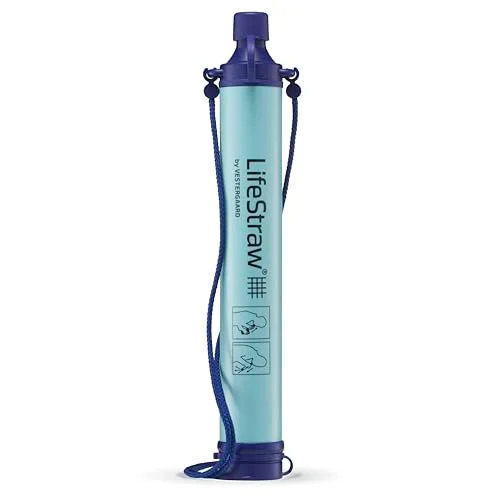
LifeStraw Personal Water Filter for Hiking, Travel and Emergency
The LifeStraw Personal is the filter people mean when they say “a LifeStraw.” You hold it in a water source, or in a container you dipped from the source, and drink through it. There is no pump, no pouch, no hose and no batteries. For a household, that simplicity is the point: put one in each go-bag, one in each car kit and one in the junk drawer, and every person has a backup that works the first time they pull it from the bag.
Think about the scenario of four hours stuck in a car after a road closure, or a day of flooding where you have to leave the house with a go-bag. A straw lets you drink from a container you filled at the source, without carrying a bottle. It is also the best choice for older children, who understand “put it in the water and suck” without a lesson in backflushing.
What it will not do is fill a cooking pot or a pitcher, and it is a poor fit for a household of five who need a few gallons a day for drinking. Treat it as a personal tool. The listing at the time of writing is in stock on Amazon. The budget pick earns its badge because it is good enough to recommend on its own for a go-bag, and cheap enough that the family can each have one. Check the manufacturer’s listing for the rated capacity and for exactly which contaminants it claims to remove.
2. Sawyer Mini: the flexible all-rounder (Best Overall)
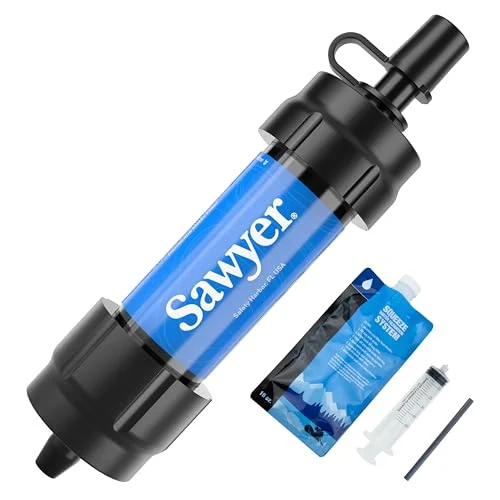
The Sawyer Mini is a small inline filter with a 0.1 micron hollow-fiber membrane, according to the manufacturer, and the manufacturer lists it as rated for up to 100,000 gallons. That number is a ceiling under ideal conditions and not a promise for muddy storm water, but it does tell you the element is built to be cleaned and reused rather than thrown out after one trip.
What earns it the Best Overall spot is what you can do with it. It threads onto many standard disposable water bottles, it can be used as a straw, it can be fitted inline with tubing, and it can be hung as a simple drip system with a bag and a hose. In a three-day outage that means you can fill a bucket, drip it through the Mini into a clean jug, and have drinking water while you do something else. For apartment households with little storage room, nothing else here gives you as many options in a space the size of your thumb.
The trade-offs are practical. The Mini by itself does not hold water, so you must supply the dirty-side container, and flow slows as the element clogs with silt. The backflush syringe in the box fixes that, but you have to use it, and you have to remember not to let the element freeze. Read the instructions once, on a calm day, rather than for the first time during a notice. If you want pouches included, step up to the Squeeze below.
3. Sawyer Squeeze with pouches: scoop and squeeze (Best Value)
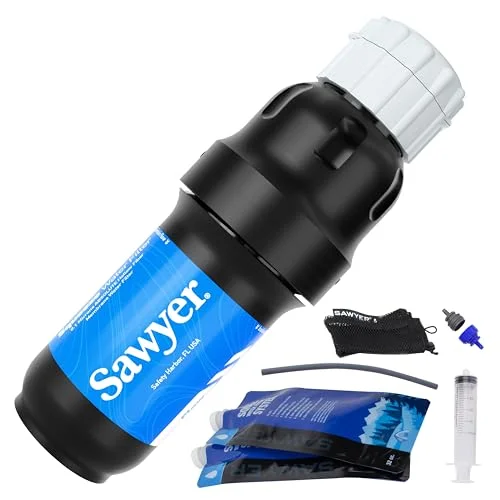
Sawyer Products SP129 Squeeze Water Filtration System with Two 32-Oz Squeeze Pouches
The Sawyer Squeeze SP129 uses the same style of 0.1 micron absolute membrane the manufacturer lists for the line, and adds two 32-ounce squeeze pouches. You scoop water from a tub or bucket into a pouch, screw the filter on and squeeze the clean water into a bottle or pot. It is slow, honest work: a couple of minutes for a liter or two, and your hands will notice after the fourth refill.
For a household that is mostly stored water with a filter as the plan B, that is fine. It is small enough to fit in a kitchen drawer, so it travels with the rest of your outage kit. If you have already read our Black Friday readiness watch list, this is the filter we flagged there as a small backup for stored water.
The limits are the pouches and the arm strength. The pouches can wear at the seams, so buy a spare set, and anyone with sore hands will find the squeezing hard. If more than two people drink from it, the gravity system below is better. One more habit worth building: label the dirty pouches clearly so no one fills a clean bottle from the wrong side.
4. Platypus GravityWorks 4-liter: the household system (Best Premium)
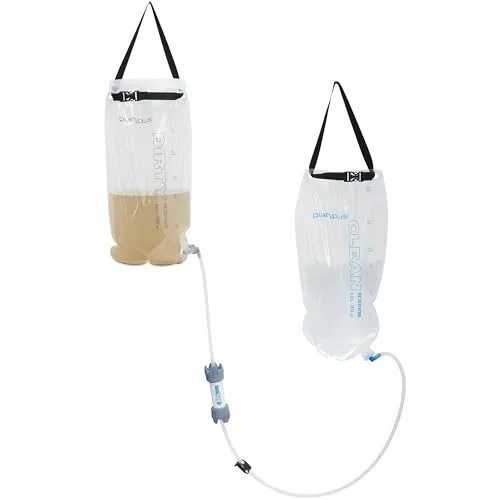
Platypus GravityWorks Group Camping Water Filter System, 4-Liter
The Platypus GravityWorks is the filter for the family. Two four-liter reservoirs, a hose and a filter cartridge: fill the dirty reservoir, hang it from a hook, and gravity moves the water through to the clean reservoir while you do something else. The maker claims a flow of up to 1.75 liters per minute, which is a best-case figure with clear water. In practice, expect it to slow as the cartridge loads with silt.
The extra money over the Sawyer pair buys capacity and hands-free operation. In a boil-water week with four people in the house, you can run two or three fills while dinner cooks, and fill every jug in the pantry without a sore hand. The clean reservoir also keeps the filtered side separate from the dirty side, which is easier to keep straight when the house is tired and dark.
The cost of that convenience is bulk. You need a hook or door frame to hang it from, and it takes real shelf space compared with the pocket filters. It also needs the same care as the others: backflush, dry, keep it from freezing. If you live in an apartment with no outdoor space, it still works indoors by hanging the dirty reservoir from a curtain rod or the top of a door. For the kitchen at night, a battery lantern keeps your hands free; our solar outdoor lighting guide lists solar lights that can charge in the day and spare your flashlight batteries in the evening.
How the Four Compare
| Spec | LifeStraw Personal Water Filter for Hiking, Travel and Emergency 8.4/10 | Sawyer Products SP128 Mini Water Filtration System 8.7/10 | Sawyer Products SP129 Squeeze Water Filtration System with Two 32-Oz Squeeze Pouches 8.5/10 | Platypus GravityWorks Group Camping Water Filter System, 4-Liter 8.8/10 |
|---|---|---|---|---|
| Type | Drink-through hollow-fiber straw | Inline hollow-fiber filter | Squeeze filter with pouches | Gravity filter, dirty and clean reservoirs |
| Use | One person, one source at a time | — | — | — |
| Power | None, no batteries or fuel | — | — | — |
| Best for | A go-bag or glovebox backup | — | One to two people | A household or small group |
| Rating | 8.4/10 | 8.7/10 | 8.5/10 | 8.8/10 |
Prices change daily — tap Check Price for the current Amazon price.
Prices change daily — tap Check Price for the current Amazon price.
Pick by household size first. One or two people: Sawyer Mini or Squeeze. A full house: GravityWorks. Everyone: a LifeStraw in each go-bag.
A Simple Plan for a Boil-Water Notice
- Read the notice. Your water utility sets the rule. Follow its instructions for drinking, brushing teeth, washing dishes and making ice.
- Use stored water first. That is what the gallon-per-person plan is for.
- Boil outdoors when you can. Camp stove or grill, outdoors only, at the distance the label states from the house. Never bring a grill indoors for any reason.
- Filter when you cannot boil. Pick the right filter for your headcount, and read its instructions before you need it.
- Keep the clean side clean. Dedicated, labeled containers for clean water, a different set for dirty water.
- Check the all-clear. Do not return to tap water until your utility says so, and ask them about flushing lines.
FAQ
Is a water filter enough during a boil-water notice?
Follow the notice. If it says boil, boiling is the instruction. A filter is the backup when you have no way to boil, and you should read what the maker says it removes. If you are unsure, ask your water utility or local health department.
How much water should I store?
Ready.gov recommends storing at least one gallon of water per person per day for several days, for drinking and sanitation. Pets need water too, so count them in the total. A filter extends that plan; it does not replace it.
Can I use a pocket filter for a whole family?
For a day or two, yes, by passing the filter between people or using a squeeze system. For longer than that, a gravity system is much less tiring, because it fills while you do other things.
Do these filters work on any water source?
No. They are meant for questionable fresh water such as storm runoff or a stored bucket. Do not use them on water that smells of fuel or chemicals, and do not assume they handle salt water. Check each maker’s listing for the specifics.
Do I need to clean the filter?
Yes. Follow the maker’s backflush and drying instructions. Flow slows as silt builds up, and cleaning restores it. Do not freeze a wet filter.
Do filters expire?
Most have a rated lifespan, and the maker’s listing states it for each. Check it, write the purchase date on the package and run clean water through the filter once a year to make sure it still flows.
Can I use these for medical devices or baby formula?
Ask your pediatrician, pharmacist or health department what water to use for infant formula and any medical device during a notice. This guide does not give medical advice, and a filter’s claims are not a medical recommendation.
The Bottom Line
For a house with a family, buy the Platypus GravityWorks as the household filter and a Sawyer Mini for each go-bag, then add a LifeStraw Personal per person if you want a cheap spare in the car. The Sawyer Squeeze is the middle choice for one or two people. Store water first, boil outdoors when the notice says boil, and keep a battery-backed carbon monoxide alarm in the house if you burn any fuel. Whichever filter you pick, take it out of the package once, read the instructions and run a liter of clean water through it before you need it.