A burst main, a boil-water notice or a storm that knocks out the pump on a well can leave a household with dry taps for two or three days. For most homes the best answer is a set of stackable 5-gallon containers, with a collapsible jug for the car and, if you have a garage or basement, one large barrel. The Saratoga Farms 30-gallon set is the budget pick and the Augason Farms 55-gallon barrel is the upgrade for people with the space.
Ready.gov recommends that you store at least one gallon of water per person per day for several days, for drinking and sanitation. That sentence is the whole planning rule: count the people in your home, add pets, multiply by the number of days you want to cover, and buy containers that hold that total. This page ranks six containers by how well they fit the situations most households are really in: an apartment closet, a suburban garage, a car trunk.
Quick Picks
- Best Budget: Saratoga Farms 30-gallon stackable set. Six lidded containers you can buy once and add to later.
- Best Overall: Scepter 2-pack 5-gallon containers. Small, simple, and easy to move.
- Best Value: WaterPrepared ReadyJug 7-gallon. A built-in spigot and a stackable shape for one-person pouring.
- Best for small apartments: Wolverine Tuff Bottle collapsible 5-gallon. Folds flat until you need it.
- Biggest single tank: WaterPrepared 35-gallon. One spot, one large reserve.
- Best Premium: Augason Farms 55-gallon barrel. The most water in one filling, for people with a garage or basement.
What to Know Before Buying
Match the container to your space and your back
Water is heavy, and the number on the listing is capacity, not carrying weight. A container you cannot lift is a container you cannot pour from, so many households do better with several small cans than one large drum. If anyone who will use the water is older or has a bad shoulder, choose the 5-gallon size and fill it only part of the way. A half-full can is better than a full one nobody can move.
Large containers work well when you can fill them where they will sit. A 35- or 55-gallon unit goes in a garage, utility room or basement corner, and you then draw water out with a spigot or hand pump. If you rent an apartment or live upstairs, skip them.
Check for food-grade wording
Ready.gov says that if you must prepare your own containers of water, you should purchase food-grade water storage containers. In practice that means reading the listing for “food-grade” or “BPA-free” wording from the maker, and staying away from used jugs that once held something else. Milk jugs are a poor choice because residue is hard to clean out; so are containers with an unknown history.
Plan to rotate
Ready.gov says water that has not been commercially bottled should be replaced every six months. Put a reminder in your phone the day you fill the containers, and write the date on masking tape on each lid. Rotation is less work than it sounds: dump the old water on the garden or use it for mopping, wash the container with dish soap and rinse it, then refill. Follow the cleaning and sanitizing steps on Ready.gov or the manufacturer’s care sheet.
Pick a storage spot that fits the weather
Keep containers out of direct sunlight and away from fuel, paint and solvents. Water in a garage or shed can freeze in a hard winter, and a frozen container can crack. In a cold climate, store the containers inside, or in a closed, insulated spot, and leave some air space at the top so there is room for water to expand. A sealed outdoor box such as the ones in our deck box guide can keep sun and rain off containers in a mild climate, but it will not stop a freeze.
Spigots, lids and extras
Most storage jugs ship with caps only. A spigot saves you from tipping a heavy container, but it adds a part that can leak or collect grime. Think about what the container needs beyond the container itself: a funnel, a spare cap, a strap wrench for stubborn lids, and a dedicated marker for dating the lids. If you plan to keep water through a boil-water notice or flood, read the label on any treatment product and follow the ratio and wait time on the package.
Water for pets and for sanitation
The Ready.gov guidance covers drinking and sanitation, so your total should include washing hands and dishes, and a pet bowl for each animal. If you have a dog or cat, add them to the head count when you do the math. If you have a baby, a household member on a special diet or a medical condition, ask your clinician or supplier what extra water you need. We will not guess for you here.
Detailed Reviews
1. Saratoga Farms 5-Gallon Stackable Water Storage Containers, 30 Gallons
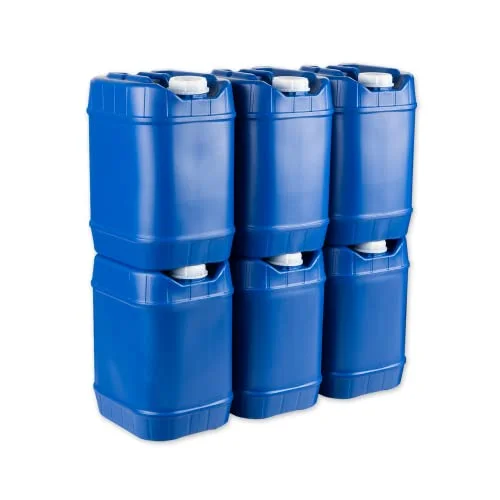
Saratoga Farms 5-Gallon Stackable Water Storage Containers, 30 Gallons
This is the container set to start with. The listing describes six stackable 5-gallon containers, for 30 gallons in total, intended for camping and disaster preparedness. That is a reasonable first reserve for a couple or a small family for a few days, based on the Ready.gov rule above, and each container is small enough to carry on its own.
The stackable shape matters more than it sounds. In a small home you want to build a tower in the bottom of a closet, not use up floor space with round jugs. Lids keep dust out, and the listing mentions a spigot kit and wrench for some versions, so check which one you are ordering. Buying budget gear is fine here because water storage is simple: a plastic jug holds water, and the main risk is a cheap seal or a cracked handle. Look over each unit when it arrives, fill it, and let it sit on a towel for a day to watch for drips.
2. Scepter 2 Pack 5-Gallon Water Container, Sand
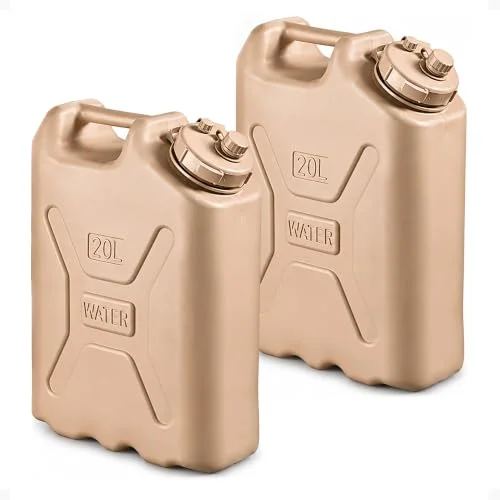
Scepter’s 5-gallon cans are a long-running favorite for camping and emergency kits, and they make a sensible second layer for a household that already has a bulk reserve. The pack of two is easy to keep in a pantry, in a car trunk during storm season or by the back door. A flexible pouring spout stores in the neck of the can, so you can tip water into a pot with one hand on the handle.
The trade-off is stacking. The shape is boxy but not designed to interlock like the brick-style jugs, so a tall pile can shift if bumped. Buy two or three packs rather than relying on a single pair, and match the count to your household’s number of people and days.
3. WaterPrepared ReadyJug 7 Gallon Portable Emergency Water Tank
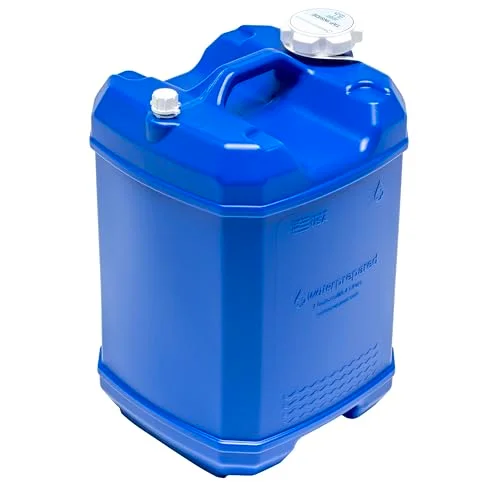
WaterPrepared ReadyJug 7 Gallon Portable Emergency Water Tank
The ReadyJug’s selling point is the built-in dispenser spigot. During a long outage you will fill a kettle or cup many times a day, and tilting a heavy can each time is how people drop things or strain a back. A spigot lets you set the jug on a counter or step and fill from it.
At seven gallons, each unit is bigger than the 5-gallon cans, which means fewer containers to date and rotate, but a full jug is a two-hands carry for many people. The listing describes it as stackable, which helps in a closet. Keep an eye on the spigot: rinse it when you rotate water, and check the seal after the first fill.
4. Wolverine Tuff Bottle 5 Gallon Collapsible Water Container
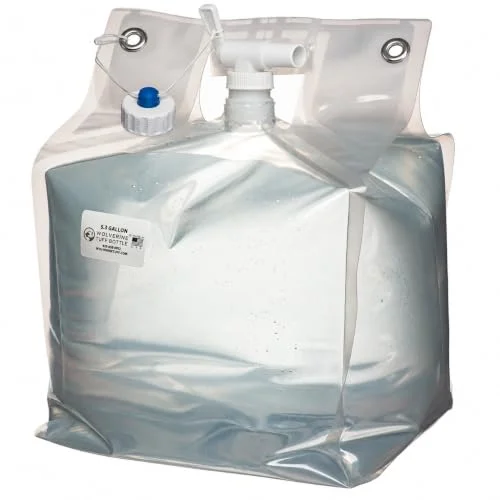
Wolverine Tuff Bottle 5 Gallon/20 Liter Collapsible Water Container
A collapsible container is the right answer for an apartment where every closet is full. It folds flat in a drawer or under a sofa and expands when you fill it, and the fast-flow spout makes pouring quick. It is also a good car item: when the road is closed or a boil-water notice goes out, you can fill it at a friend’s house or a distribution point and bring it home without a bulky can.
Think of it as a supplement, not your main reserve. Soft-sided containers are more vulnerable to punctures than rigid ones, and a full one will sag rather than stand straight. For long-term storage at home, pair it with a few rigid cans.
5. WaterPrepared 35 Gallon Portable Utility Water Tank
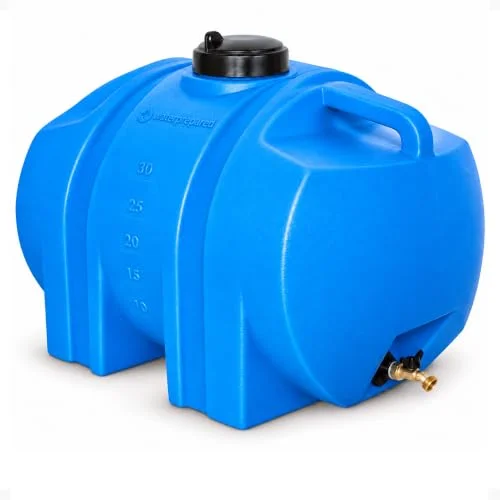
WaterPrepared 35 Gallon Portable Utility Water Tank
The 35-gallon tank sits between the cans and the barrel. According to the listing, it has a dispenser spigot, handles and strapping points, and it is aimed at camping, survival and travel. For a family of four, it can serve as the main reserve for a few days of drinking and sanitation, based on the Ready.gov guidance above, with the small cans covering overflow.
The big caution is weight. Once it is full, it is a permanent installation, so fill it where it will live, such as a garage corner on a shelf or a utility room. The other drawback is that one tank is one container: if the spigot leaks or the cap is damaged, you lose the whole reserve. Many households split the same volume across a tank and a handful of cans.
6. Augason Farms Water Storage Barrel, 55-Gallon
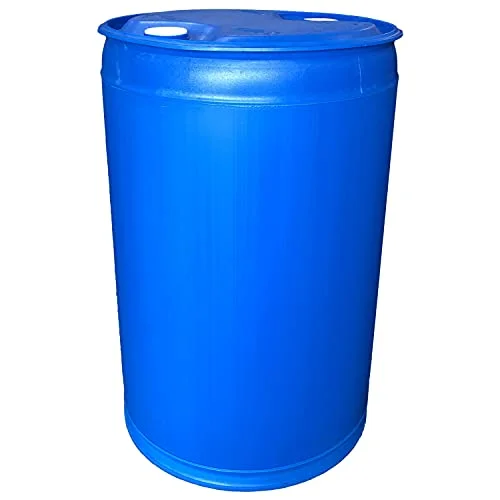
Augason Farms Water Storage Barrel, BPA-Free Plastic, 55-Gallon
The 55-gallon barrel is the upgrade for people with a garage, a basement or a back porch. The extra money buys a larger single reserve in a heavy-walled barrel, which means one filling session covers a family for days instead of a dozen trips to the tap. The listing describes it as BPA-free plastic.
It comes with the practical issues of any barrel. You need a siphon or pump to get the water out, so factor that into the order. You cannot lift a full barrel, so set it on a level floor or a low platform before you fill it, and plan a way to rotate it every six months; a siphon hose and a bucket make that manageable. Check the listing for the current lead time before relying on it for a deadline such as hurricane season.
Compare All Six
| Spec | Saratoga Farms 5-Gallon Stackable Water Storage Containers, 30 Gallons 9/10 | Scepter 2 Pack 5-Gallon Water Container, Sand 8.6/10 | WaterPrepared ReadyJug 7 Gallon Portable Emergency Water Tank 8.5/10 | Wolverine Tuff Bottle 5 Gallon/20 Liter Collapsible Water Container 8/10 | WaterPrepared 35 Gallon Portable Utility Water Tank 8.3/10 | Augason Farms Water Storage Barrel, BPA-Free Plastic, 55-Gallon 8.8/10 |
|---|---|---|---|---|---|---|
| Capacity | 5 gallons each, 30 gallons total (listing) | 5 gallons each | 7 gallons | 5 gallons / 20 liters | 35 gallons | 55 gallons |
| Design | Stackable, with lids | — | Stackable jug with built-in dispenser spigot (listing) | Collapsible with fast-flow spout | — | — |
| Material | Food-grade plastic (listing) | — | — | — | — | BPA-free plastic (listing) |
| Use | Closet, pantry floor or garage shelf | Pantry, trunk or camping | Garage, closet or apartment storage | Apartments, go-bag and car trunk | Garage or utility room, one spot, one big reserve | Long-term reserve in a garage or basement |
| Rating | 9/10 | 8.6/10 | 8.5/10 | 8/10 | 8.3/10 | 8.8/10 |
Prices change daily — tap Check Price for the current Amazon price.
Prices change daily — tap Check Price for the current Amazon price.
How Much to Buy, in Real Situations
A one-person apartment, three days. One gallon a day for three days is a few gallons. The Wolverine collapsible plus a Scepter can covers it without taking much space.
A family of four, a week. Multiply the Ready.gov per-person number by four people and seven days and you will see why many families choose a mix: a tall stack of lidded cans from the Saratoga set for the pantry, and the 35-gallon tank or the 55-gallon barrel for the garage.
A rural home on a well. If the pump loses power, you lose water as well as light. Our week without power checklist walks through a house room by room, and a portable power station can run a small pump or charge a phone. Check the pump’s wattage in its manual before you rely on a power station for it, and ask your supplier about backup power.
A household with a pet or an older relative. Add each animal to the head count and round up. If anyone needs medication that has to be kept cool or mixed with water, ask a pharmacist how to plan.
A Simple Setup That Works
- Pick the total from the Ready.gov rule and write it on a sticky note.
- Choose containers that you can lift: buy small cans first, add a large one later.
- Wash with dish soap, rinse and fill with tap water from a safe municipal source.
- Label each lid with the fill date and set a phone reminder for six months out.
- Store them out of sunlight and off the floor where you can, with the heaviest at the bottom.
- At the six-month mark, swap the water and wash the container again.
Do this on a quiet Saturday, not when the storm warning arrives. Pair it with a battery-powered weather radio so you hear about a boil-water notice early; our weather radio guide covers the options.
FAQ
How much water should I store?
Ready.gov recommends at least one gallon of water per person per day for several days, for drinking and sanitation. Add pets, and ask your clinician if anyone in the home has a health condition that affects needs.
How often do I replace stored water?
Ready.gov says water that has not been commercially bottled should be replaced every six months. Date the lid when you fill it.
Can I reuse milk jugs or soda bottles?
It is better to use containers sold for water storage. Ready.gov advises food-grade water storage containers if you prepare your own. Containers that held something else, or that you cannot clean well, are a poor choice.
Are stackable cans better than a barrel?
For most households, yes, because you can lift them and spread the risk. A barrel makes sense if you have the floor space, a pump and a plan to rotate it.
Where should I store the water?
Somewhere cool, shaded and clean, away from fuel and chemicals. If your area freezes, keep containers indoors and leave a little air space at the top.
Do I need to treat stored water?
Follow the instructions of your local water utility and the label of any treatment product, including the ratio and wait time printed on the package.
Is a collapsible container good enough on its own?
It is a good backup and a good car item, but a rigid can or barrel is a better main reserve.
The Bottom Line
Start with the Saratoga Farms 30-gallon stackable set and add a pack of Scepter 5-gallon cans as your car and overflow supply. If you have the space and a pump or siphon, the Augason Farms 55-gallon barrel buys you a larger reserve in one filling. Whatever you choose, date the lids and replace the water every six months.