A sale week is a sensible time to fill a gap in your outage kit, as long as you know which gap you are filling. This watch list covers the three categories on this site that tend to be marked down around Black Friday and Cyber Monday: portable power stations, indoor-rated propane heaters and emergency water storage. For each one you will find what to check before you buy, the spec traps that catch people, and which of our existing pages go deeper. It is written for a household that wants to be ready for something like a week without power, not for a worst-case movie plot.
We do not quote sale figures here, and we never list prices on this site. Offers change by the hour, so every product card below links to the live Amazon listing, and that listing is the only place to see what you would actually pay.
Quick Picks
- Best Premium: the Jackery Explorer 1000 v2, a LiFePO4 power station with solar input for a household that wants multi-day backup.
- Best Budget: the Saratoga Farms stackable 5-gallon containers, the cheapest way to turn a closet into a water reserve.
- Editor’s Pick: the Sawyer Squeeze filter, a small backup for stored water.
- Best Overall for safety: a battery-operated Kidde carbon monoxide alarm, because every heater, stove and generator conversation ends with it.
How to Use a Sale Week Sensibly
Start from the outage you are planning for, not from the product list. Pick a situation and a time span: “a week without power in winter”, “three days after a storm”, “an overnight outage with a medical device in the house”. Then write down what that situation needs: light, water, warmth, a way to charge phones, a way to keep food safe. Anything already covered, skip. The one or two gaps that remain are your shopping list.
Our week without power checklist walks through a house room by room and is a good place to find those gaps. If you already own a headlamp, a radio and a few lanterns, a sale week is better spent on water storage or a power station than on a fourth flashlight.
Three habits make shopping a sale calmer:
- Decide the category before the sale starts. A listing that looks like a bargain on a category you did not need is still the wrong purchase.
- Open the product page and read the specs yourself. Product names in a sale are often shortened or bundled differently from the standard listing.
- Check the return window and who sells the item. If the item arrives and does not fit your plan, you want a clear way back. Look at the return terms on the listing page rather than assuming.
Portable Power Stations: What to Check First
Power stations are the category where shoppers most often compare the wrong numbers. The headline figure on a listing is usually watt-hours (Wh), which is how much energy the battery holds, or watts (W), which is how much it can deliver at once. Both matter, and they answer different questions.
Capacity (Wh) decides how long. A small unit is fine for phones, a router, a CPAP-free evening of lights and a laptop. It will not carry a refrigerator for long. A larger unit stretches further but weighs more and takes longer to recharge.
Output (W) decides what. If a device draws more than the station’s rated output, it will not run. Check the label or manual on the appliance for its wattage and compare it with the listing. For medical devices, check the wattage in the device manual and ask your supplier about backup power. Do not assume a station will run a particular device for a particular time unless the manufacturer says so.
Battery chemistry decides how long it lasts. LiFePO4 (also written LFP) packs are generally rated for more charge cycles than older lithium-ion chemistries, which is why the premium pick here uses one. If a station sits in a closet and gets used a few times a year, chemistry matters less than for one used every weekend, but a longer-lived pack is a reasonable reason to pay more.
Solar input is a spec, not a feature. Many listings say “solar generator” even when the panel is not included. Read the bundle description: is the panel in the box, and does its connector match the station’s input? A station with solar input and no panel is still useful, but you will need to buy one.
Other traps to look for:
- A bundle that swaps the model’s usual accessories for a bag or a charger you do not need.
- A different capacity under a near-identical name. Compare the Wh figure in the title, not just the model name.
- Warranty terms that differ between marketplace sellers. Check the brand’s listed warranty on the product page.
- Safety notices. Look up the exact model on the CPSC site before you buy, especially from a brand you have not heard of, so you know about any open remedy before checkout rather than after.
Where you place a power station matters too. Keep it indoors on a hard surface, away from heat and dampness, and plug it in to charge before the weather turns. A power station has no exhaust, so unlike a fuel generator it can run indoors. A fuel generator, by contrast, must be operated outdoors only, at a distance the label states, never in a garage or near windows or vents. Our power station versus generator guide goes through that choice, and the best portable power stations roundup ranks several options by household size.
Jackery Explorer 1000 v2: the larger LiFePO4 pick
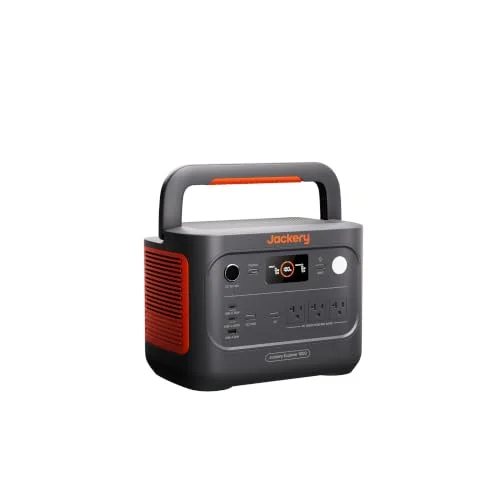
If you want to cover a router, lights, phone charging and short cycles on a small refrigerator through several days, this is the sort of unit to look at. The extra money over a compact station buys capacity and a longer-lived LiFePO4 battery, along with a higher output that handles more than one device at a time.
Jackery Explorer 1000 v2 Portable Power Station, 1024Wh LiFePO4 Battery
Before buying, confirm the Wh figure in the listing title, whether a solar panel is in the bundle, and that you have a spot for a unit this size. If the sale bundle includes a panel, check its wattage and connector against the station’s input. If you only want a smaller kit for phones and lights, the compact options in our power stations roundup will do the job with less weight.
Solar charging only helps when you can place a panel in sun. If you plan to save the station’s battery for the fridge and the router, run the lights off something else. A set of solar outdoor lights can charge in daylight and light a porch or path in the evening without drawing from the station at all.
Indoor-Rated Heaters: Where to Be Strict
Heaters are the category where a sale price is the least important thing on the page. The key question is whether the heater is rated for indoor use, and the answer must come from the manufacturer’s label and manual.
Only use a heater that is rated for indoor use, with an oxygen-depletion sensor as described by the manufacturer, and use it per the label, with the ventilation it specifies. Never use a grill, patio heater, fire pit or oven to heat a room. Those are outdoor tools, and they produce carbon monoxide that can build up in a closed space.
What to check on a heater listing:
- Indoor rating. The listing and the product label should say it is designed and rated for indoor use. If the listing is vague, leave it.
- Safety features. Look for an oxygen-depletion sensor and a tip-over shutoff as listed by the manufacturer.
- Fuel connection. Small propane units may use small cylinders or an adapter hose to a larger tank. Make sure you know which, and that the bundle includes the hose if you want one.
- Room size. Output is given in BTU. A small unit warms a small room. Read the maker’s guidance for the space you are heating.
- Fuel storage. Propane cylinders belong outdoors or in an area the label permits, not stored next to the heater.
We keep one page for this decision so you do not have to piece it together from listings: the best indoor-safe propane heaters for a power outage. It explains the rated-for-indoor-use test and lists the picks that meet it. If a heater on it shows up in a sale, that is a good moment to act. If a heater you have not read about shows up, compare it with the checklist above first.
If your outage plan involves cooking, cook outside. A portable grill on a patio, well away from walls, windows and vents, is a reasonable way to heat food. Our portable grills roundup covers compact options for that, used outdoors only. A grill is never a heat source for a room.
Every household using any fuel-burning appliance should also have a battery-backed carbon monoxide alarm. That one sentence is the most useful safety advice in this article, and the reason the alarm is on this watch list.
Kidde Nighthawk carbon monoxide alarm
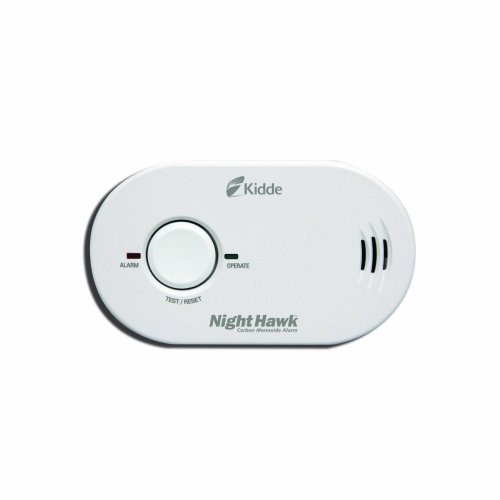
A battery-operated alarm keeps working when the power goes out, which is exactly when heaters and generators come into play. Place alarms where the label advises, and test them by the maker’s schedule.
Kidde KN-COB-B-LP Nighthawk Carbon Monoxide Alarm, Battery Operated
Alarms have a limited life. Check the replacement date on any alarm you already own, since a sale week is a convenient time to swap an old one. If you buy new, check the manufacturer’s date on the package and the stock status on the listing.
Water Storage: Boring and Valuable
Water is the least exciting item on this list and the one most outage guides put first. According to Ready.gov, you should store at least one gallon of water per person per day for several days, for drinking and sanitation. Pets drink too, so count them in your household total. Multiply that by the number of people and the number of days you are planning for, and you have your target.
Ready.gov also says that if you must prepare your own containers of water, you should purchase food-grade water storage containers. Look for that wording in the listing, and read the description for materials and any BPA-free statement from the maker. Ready.gov adds that water that has not been commercially bottled should be replaced every six months, so put a reminder in your calendar the day you fill the containers.
What to check on a water container listing:
- Food-grade material. The listing should say so. Avoid containers that previously held anything else.
- Size per container. A big container holds more but is hard to move when full. Many households do better with several smaller ones that one adult can lift.
- Stackability and footprint. Measure the closet or shelf before you order. Stackable designs use vertical space well.
- Lids and spigots. Some listings include a spigot, some do not. Check the contents list, and note whether a wrench for the lid is included.
- Pack size. A larger pack may have fewer accessories per container than a smaller one. Compare what is actually in the box.
- Storage location. Keep containers out of direct sunlight and away from fuel, solvents and strong smells.
Stackable containers are the budget anchor of this watch list because they are the simplest upgrade to an outage kit: no batteries, no setup, nothing to learn.
Saratoga Farms 5-gallon stackable containers: the best budget buy
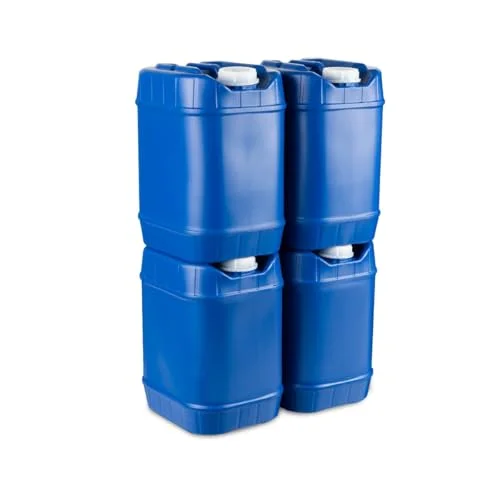
This set gives you 20 gallons of stored water in a stack that fits in a closet corner. By Ready.gov’s one-gallon-per-person-per-day guidance, that is a start for one person or a short plan for a small household, and a base you can add to.
Saratoga Farms 5-Gallon Stackable Water Storage Containers, 20 Gallons
Before you buy, decide how many containers you can fill and lift. If you live in an apartment, a stack of four may be your realistic ceiling, and that is fine. Pair it with bottled water for the first day or two, and use the containers for the rest.
Sawyer Squeeze: a small backup filter
Stored water is the plan. A filter is the backup if you run through it. The Sawyer Squeeze is a hollow-fiber filter that the manufacturer lists as 0.1 micron absolute. It does not need power, tablets or fuel.
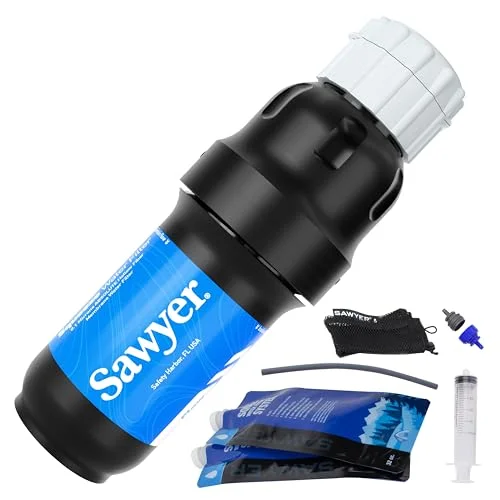
Sawyer Products SP129 Squeeze Water Filtration System with Two 32-Oz Squeeze Pouches
If you also keep purification tablets or drops, follow the ratio and wait time on the package. Do not guess. A filter should live in your go-bag or the kitchen drawer with the instructions beside it, and you should read how to clean it between uses before you ever need it.
A Sensible Order of Operations
If you cannot buy everything, here is an order that works for most households:
- Water first. It is the cheapest item and the first thing people want back.
- A battery-backed carbon monoxide alarm. It protects the household before any other gear does.
- A power station sized to your situation. Compact if you mostly need phones and lights, larger if you want a router and a refrigerator cycle.
- An indoor-rated heater, only if you live where outages come with cold weather. If you do, buy one that meets the checklist above.
Skipping steps is fine. Not every household needs every item, and a plan that matches your actual risk beats a shopping cart that matches the sale.
Common Mistakes to Avoid
- Buying a bundle you do not need. Accessories can inflate a listing’s headline value while skipping the one thing you wanted.
- Counting watt-hours without checking watts. A big battery with low output will not run a heavy appliance.
- Trusting a vague “indoor safe” claim. Look for the rating on the label and the oxygen-depletion sensor in the manufacturer’s description.
- Filling containers and forgetting them. Put the replacement date on the calendar.
- Storing fuel with the heater. Fuel and appliances have separate storage rules on the label.
- Skipping the return window. Know how to send something back before you order.
- Buying from a seller you cannot identify. Check who sells the item and ships it.
Comparison at a Glance
| Spec | Jackery Explorer 1000 v2 Portable Power Station, 1024Wh LiFePO4 Battery 9/10 | Saratoga Farms 5-Gallon Stackable Water Storage Containers, 20 Gallons 8.7/10 | Sawyer Products SP129 Squeeze Water Filtration System with Two 32-Oz Squeeze Pouches 8.6/10 | Kidde KN-COB-B-LP Nighthawk Carbon Monoxide Alarm, Battery Operated 8.8/10 |
|---|---|---|---|---|
| Battery | LiFePO4, 1024Wh (listing) | — | — | — |
| AC output | 1500W (listing) | — | — | — |
| Solar | Solar input supported, panel sold separately | — | — | — |
| Use | Fridge, lights, router and phones through a multi-day outage | Closet, garage shelf or pantry floor | Backup for stored water or untreated sources | Bedroom hallways and the room with a heater |
| Rating | 9/10 | 8.7/10 | 8.6/10 | 8.8/10 |
Prices change daily — tap Check Price for the current Amazon price.
Prices change daily — tap Check Price for the current Amazon price.
FAQ
Which outage items usually go on sale around Black Friday?
On this site, portable power stations, small propane heaters and water storage containers are the categories that most often see markdowns in late November. Offers change quickly, so the live Amazon listing is always the place to confirm what is available.
Should I wait for Cyber Monday instead?
There is no need to treat the days as a race. If an item fits your plan and the listing checks out, buy it. If it does not, skip it. A calm plan rarely depends on a particular day.
How much water should I store?
Ready.gov recommends storing at least one gallon of water per person per day for several days, for drinking and sanitation. Count pets in your household and size the plan to the days you want to cover.
Is it safe to run a power station indoors?
Power stations do not burn fuel and have no exhaust, so they are designed for indoor use per the manufacturer. Follow the manual for ventilation and placement. Fuel generators are different: operate them outdoors only, at the distance the label states, never in a garage or near windows or vents.
Can I use a grill or fire pit to stay warm?
No. Grills, patio heaters, fire pits and ovens are never indoor heat sources. Only use a heater rated for indoor use, per its label and the ventilation it specifies. Keep a battery-backed carbon monoxide alarm on every level where you sleep, and test it by the maker’s schedule.
Will a power station run my medical device?
Check the wattage in the device manual and ask your supplier about backup power. Do not rely on a runtime estimate unless the manufacturer states it for your device.
What if a listing is cheaper but the name is slightly different?
Compare the capacity, output and included items line by line. Near-identical names often point to different bundles or older versions.
The Bottom Line
A Black Friday week is a good time to close one or two gaps in your outage kit, as long as you shop from a list instead of from the sale feed. Start with water and a battery-backed carbon monoxide alarm. If you want multi-day backup power, the Jackery Explorer 1000 v2 is our premium pick, and the Saratoga Farms stackable containers are our budget anchor. Add an indoor-rated heater only if cold-weather outages are part of your plan, and use the checklist above to confirm the rating before you order.