A week without power is manageable if each room already has the one or two things it needs: a light in every room you use, a stored supply of drinking water, a plan for food, a way to hear weather alerts, and a way to keep phones charged. This guide walks through the house room by room, with six items worth owning and a few that cost nothing but a Saturday afternoon.
It is written for households in houses and apartments, including families with kids, pets, or an elderly parent. Nothing here needs a basement full of gear. If you only do three things, buy a lantern for each room, fill a few water containers, and put a battery-backed carbon monoxide alarm on every level.
Quick Picks
- Best Budget: Lichamp 4-pack LED lanterns. One light per room for a small outlay.
- Best Overall: Midland ER310 weather radio. Alerts, news and a flashlight that keep working without batteries.
- Best Premium: BLUETTI AC180. The extra money buys stored energy for a fridge, router and device charging, which the lanterns and radio cannot do.
- Best Value: Reliance Aqua-Tainer pack of 2. Water storage is the cheapest preparation that matters most.
- Editor’s Pick: BLACK DIAMOND Spot 400 headlamp. Hands-free light for the kitchen and the stairs.
How to Think About a Week
Most outages are short. A longer one, such as an ice storm, a hurricane, or a damaged line after a windstorm, is where a household feels the gaps. Over seven days the problems are not dramatic. They are dark evenings, a warm fridge, a dead phone, a cold house, and nobody sure what the forecast says.
Plan in layers. The first night is about light and calm. The second and third day are about water, food and charging. By the middle of the week, the questions are warmth or heat relief, keeping medications within their label range, and keeping people occupied.
Ready.gov, the American Red Cross and the National Weather Service all publish free preparedness guidance, and it is worth reading their pages once before storm season rather than during it. This guide does not restate their numbers. Where an official figure matters, such as how much water to store per person per day or how long food stays safe, check the issuing page directly and write the number on the list you keep with your supplies.
Living Room and Family Spaces: Light for the Evening
The living room is where everyone ends up. Get light right here and the whole first evening goes smoother.
Candles are the usual answer and the wrong one. Open flame in a house with kids, pets and rushing adults is how a bad night gets worse. A battery LED lantern gives steady light with no flame, no smoke and no heat.
A four-pack is the efficient way to do it. The Lichamp LED Camping Lantern 4-pack runs on AA batteries according to its listing, folds flat, and has a hook so it can hang from a cabinet handle or sit on a table. That is one for the living room, one for the kitchen, one for the bathroom, and one for a bedroom hallway. Pack spare AA batteries in the same bin and store them separately from the lanterns so a slow battery leak never ruins the lights.
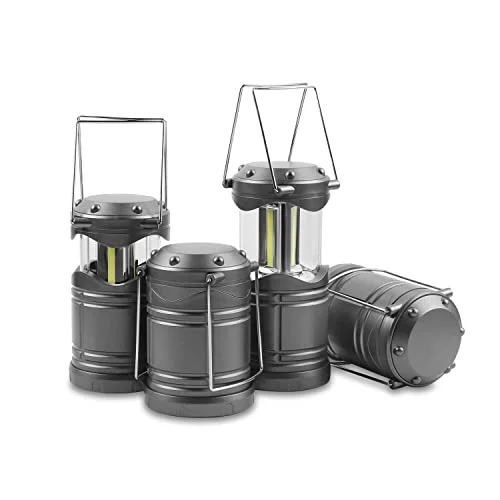
Lichamp LED Camping Lantern, 4 Pack Battery Powered Flashlight for Power Outages
If you want the lanterns to last longer, use them at the low setting in rooms people pass through, and one brighter lantern where you sit and read. Rotating batteries is a small habit: replace them when you switch your smoke alarm batteries in spring and fall.
Outside, the path to the front door and the steps are where people trip in the dark. Solar path lights that charge by day cost nothing to run at night and keep the lantern batteries for indoors. Our solar outdoor lighting guide covers the options that hold up to weather.
Kitchen: Water, Food and Light for Your Hands
The kitchen is where a week without power gets practical. It is also where a headlamp earns its keep.
Light you can cook by
A lantern sits on a counter and casts shadows. A headlamp puts light exactly where your hands are. The BLACK DIAMOND Spot 400 is a dimmable, AAA-powered headlamp with a red night-vision mode. The listing states 400 lumens at the top setting. You will rarely need that much indoors, which is why the dimmable feature matters: low settings stretch the batteries over a week.
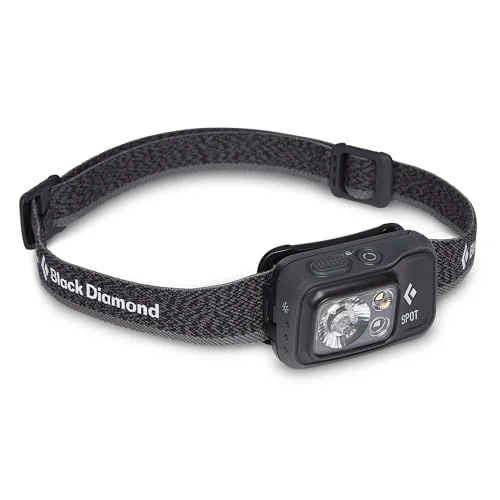
The red mode is useful at night. You can go to the bathroom or check on a child without waking the whole room.
Water
Water is the single item to treat as non-negotiable. A household of any size needs a supply that does not depend on the tap, because pumps and treatment plants can go down with the power, and well pumps stop outright.
Ready.gov publishes a per-person, per-day recommendation and a recommended number of days; read it on their water page and multiply it by the number of people and pets in your home. Then buy containers that fit that total. The Reliance Aqua-Tainer 7 Gallon, pack of 2 gives you two rigid containers with handles. Rigid containers stack, resist punctures and are easier to store than a pile of loose bottles.
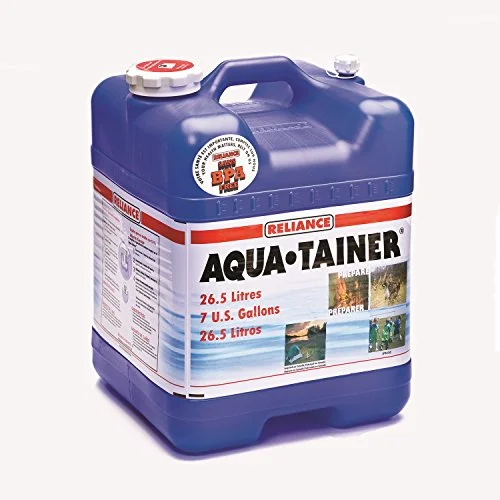
Reliance Products Aqua-Tainer 7 Gallon Rigid Water Container (Pack of 2)
A few practical notes:
- Clean and rinse the containers before filling them, using the maker’s instructions.
- Label each with the fill date and keep them away from direct sun and from fuels or cleaning chemicals.
- Store them where you can reach them, such as the bottom of a pantry or a closet near the kitchen, not behind boxes in the attic.
- Fill the bathtub with water for flushing when a storm is forecast. It is not for drinking.
- If you rely on a purification tablet or drop for backup water, follow the ratio and wait time on the package.
Pets drink from the same supply, so count them in the total.
Food
The fridge is the question everyone asks about. Keep the doors closed as much as possible, and check the Ready.gov and USDA pages for how long food stays safe in the fridge and in a full freezer. Throw out perishable food that has been above the safe temperature for longer than they say. A cheap appliance thermometer in each of the fridge and freezer tells you the truth instead of leaving you to guess.
For the week, plan around food that needs no refrigeration and little or no cooking: canned beans, tuna, peanut butter, crackers, shelf-stable milk, dried fruit, cereal, and food for pets and infants. Keep a manual can opener with the cans.
Cook outdoors only. A portable propane or charcoal grill belongs outside, away from the house, at the distance the manual states, and never in a garage or on a covered porch. If you are considering one, see our portable grills guide. Never use a grill, camp stove or oven to heat the inside of a home.
Because you will be cooking and heating with fuel in some form, put a battery-powered carbon monoxide alarm in your home. It is an easy sentence to skip and the one that matters most. The Kidde COB runs on AA batteries per its listing, so it keeps working when the electricity is off.
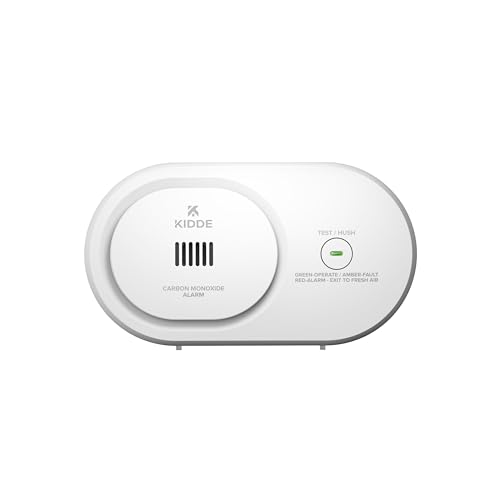
Kidde Carbon Monoxide Detector, AA Battery-Powered, COB
Put one on every level of the home, and make sure it is battery-backed so an outage does not switch it off. Press the check button on your alarms now, replace the batteries on the schedule printed in the manual, and replace the alarm itself at the end of its listed life.
Bedrooms: Warmth, Sleep and Safety
Bedrooms are about keeping people warm or cool without introducing risk.
In cold weather, dress in layers, close doors to rooms you are not using, and pull everyone into one or two rooms. Hang blankets over windows at night. Wool socks, hats and sleeping bags rated for the season do more than any gadget.
Do not bring a grill, camp stove, patio heater, fire pit or oven indoors for warmth. They produce carbon monoxide. If you own a heater, use only one rated for indoor use, with an oxygen-depletion sensor according to its manufacturer, and follow the label for ventilation and clearances. Never leave it running while everyone sleeps unless the label allows it.
In hot weather, open windows on shaded sides, keep blinds closed on sun-facing windows, drink water, and move to the lowest floor. If anyone in the house is vulnerable to heat, plan to spend the day somewhere cooled, such as a library or a friend’s home.
Keep a lantern and a pair of shoes by each bed. Kids and older relatives are the people most likely to get up in the dark, and shoes matter if there is broken glass or debris.
Home Office and Hallway: Information, Charging and Backup Power
A radio that does not need the internet
Cell towers run on backup batteries that do not last forever. A weather radio is the reliable way to hear alerts. The Midland ER310 can be powered by solar, a hand crank or its rechargeable battery, and receives NOAA weather channels and AM/FM stations. It also has a flashlight and a USB output for topping up a phone in a pinch.
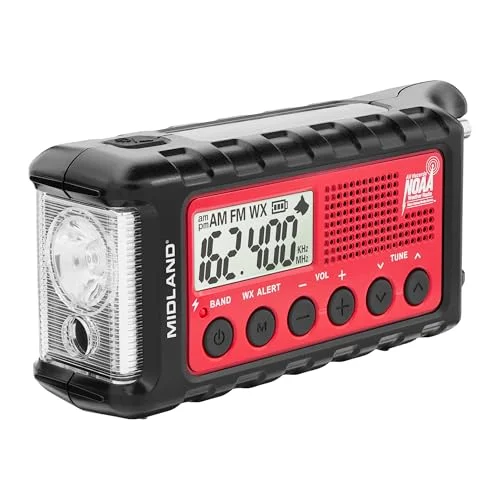
Crank charging a phone is slow. Treat it as a way to send one message or check one forecast, not as a substitute for a charged phone.
The National Weather Service explains how NOAA Weather Radio alerts work on weather.gov, and it is worth reading once so you know what the alert tones mean.
Phones, routers and bigger needs
Power banks cover phones for a day or two. For a week, or for anything that needs wall power, a power station fills the gap. If you have a medical device such as a CPAP or an oxygen concentrator, check the wattage in the device manual and ask your supplier about backup power. Do not assume any battery will run it for a given time unless the manufacturer says so.
The BLUETTI AC180 is the size we use to represent this tier. It stores 1152Wh according to its listing and has 1800W AC output. That is enough to keep phones, a laptop and a router running through the week, and to run a fridge for stretches. The extra money over the small stations in our other guides buys capacity, and capacity is what stretches from a few hours to several days. It also runs without fuel, so it is safe to keep inside the house.
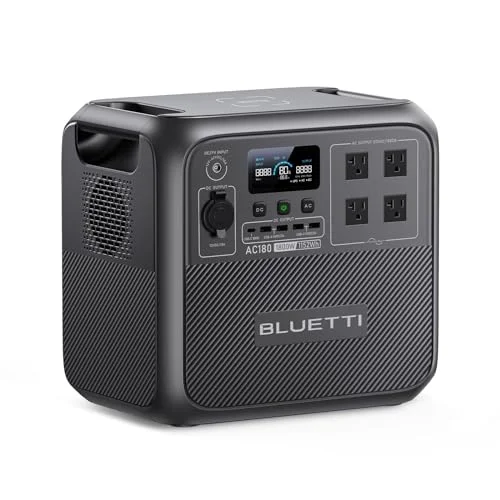
For a full comparison of sizes, see our portable power stations for outages roundup. If you are deciding between a power station and a fueled generator, read our power station vs generator guide first. If you do use a generator, run it outdoors only, at least the distance from windows, doors and vents that the manual and Ready.gov specify, and keep a battery-backed carbon monoxide alarm inside.
A power station is not a heater. Do not plan to run an electric space heater or a kettle on one for long. Plan to charge it between outages or from a solar panel on a sunny day.
Garage, Porch and Storage: Where the Kit Lives
All of this gear needs a home, and it should be a home you can find in the dark.
- One bin, one shelf. Keep lanterns, spare batteries, the radio, the headlamp and a first aid kit in one labeled bin on a lower shelf in a hall closet.
- Outdoor overflow. A weatherproof deck box is a good place for items that handle temperature swings, such as extra water containers, a tarp and work gloves. Our deck box guide compares sizes. Keep medications, batteries and anything that dislikes extreme heat or cold indoors.
- Medications. Keep them within the temperature range on the label and ask your pharmacist what to do if they warm up during an outage.
- Documents. Put copies of insurance, medication lists and contact numbers in a zip bag in the bin.
- Go-bag. If you might need to leave, keep a go-bag by the door with a lantern, a charged power bank, copies of documents, and a change of clothes for each person.
The Checklist, Room by Room
- Living room: one lantern, spare batteries, blankets (Lichamp 4-pack).
- Kitchen: water containers filled, shelf-stable food, a manual can opener (Aqua-Tainer, Spot 400).
- Bedrooms: a lantern and shoes by each bed, warm layers (Lichamp 4-pack).
- Hallway: a battery-backed CO alarm on each level (Kidde COB).
- Office: weather radio, charged power bank, power station (Midland ER310, BLUETTI AC180).
- Storage: one labeled bin that is easy to reach, plus a deck box if you keep overflow outside.
| Spec | Lichamp LED Camping Lantern, 4 Pack Battery Powered Flashlight for Power Outages 8.6/10 | Midland ER310 Emergency Crank Weather AM/FM Radio 8.8/10 | BLACK DIAMOND Spot 400 Headlamp, AAA Powered 8.5/10 | Reliance Products Aqua-Tainer 7 Gallon Rigid Water Container (Pack of 2) 8.4/10 | Kidde Carbon Monoxide Detector, AA Battery-Powered, COB 9/10 | BLUETTI Portable Power Station AC180, 1152Wh LiFePO4 8.8/10 |
|---|---|---|---|---|---|---|
| Pack | 4 lanterns | — | — | — | — | — |
| Power | 3 AA batteries each (listing) | Solar, hand crank, rechargeable battery | AAA batteries | — | AA batteries (listing) | — |
| Design | Collapsible, hanging hook | — | — | — | — | — |
| Use | One per room | — | Hands-free in the kitchen, stairs and utility areas | Drinking-water storage | — | Fridge, router and device charging |
| Rating | 8.6/10 | 8.8/10 | 8.5/10 | 8.4/10 | 9/10 | 8.8/10 |
Prices change daily — tap Check Price for the current Amazon price.
Prices change daily — tap Check Price for the current Amazon price.
Common Mistakes
- Relying on candles. Open flame is the most common avoidable hazard in an outage. Use LED lanterns.
- Bringing outdoor cookers or heaters indoors. Grills, camp stoves, fire pits and patio heaters are outdoors only.
- Storing water you cannot lift. A full container is heavy. Use two smaller ones if anyone in the house cannot carry a big one.
- Skipping the carbon monoxide alarm. Outages are when people use fuel, so it is when the alarm matters most.
- Waiting for the storm. Stores empty out when a forecast lands. Buy in a quiet week.
- Forgetting batteries. A lantern with dead batteries is a paperweight. Keep spares in the same bin.
- Not checking medical device needs. Ask your supplier about backup power ahead of time.
FAQ
How much should I store for a week without power? Use the per-person, per-day water figure and the days of supply published by Ready.gov, and multiply it by every person and pet in the household. Add shelf-stable food, light, batteries, and a way to hear alerts. The room-by-room list above is a starting point you can scale up or down.
Is a power station worth it for a week-long outage? It depends on what you need to run. For phones, a router and a laptop, yes. For a fridge, a larger unit like the BLUETTI AC180 helps for stretches, but it will not run heat or cooking for long. If you have a medical device, check its wattage in the manual and ask your supplier about backup power.
Can I use a camp stove or grill inside if it is cold? No. Grills, camp stoves, fire pits, patio heaters and ovens are not for heating a home. They produce carbon monoxide. Use them outdoors only, away from windows and vents, at the distance the label states. Keep a battery-backed carbon monoxide alarm on every level.
What is the best light for a power outage? A battery LED lantern in each room is the simplest, and a headlamp for tasks. Avoid candles. Spare batteries matter more than lumens.
How do I keep food safe? Keep fridge and freezer doors closed, use an appliance thermometer, and follow the USDA and Ready.gov pages for how long food stays safe. When in doubt, throw it out.
Where should I keep all this gear? In one labeled bin at a lower shelf near the center of the house, with a few weather-tolerant items in a deck box outside.
The Bottom Line
You do not need a bunker to be ready for a week without power. You need light in every room, water you stored ahead of time, a weather radio, a way to charge phones, and a battery-backed carbon monoxide alarm. Start with the Lichamp 4-pack for light, the Midland ER310 for information, and the Reliance Aqua-Tainer pair for water. Add the BLUETTI AC180 if you want a fridge and router to survive the week.
Do it in one afternoon, put it in one bin, and check it when the clocks change.