For a night or a long weekend without power, a battery power station is the simpler and safer choice, especially in an apartment. For a week or more, or if you need to run a refrigerator and several other loads, an inverter generator used outdoors will outlast any battery. Most households end up somewhere between the two: a power station for the first days and for anything that has to stay indoors, and a generator only if the house is large and outages in your area run long.
This comparison is built around three situations: one night in the dark, a three-day storm, and a week or more without grid power. Rankings come from manufacturer specifications and listing data.
For a wider look at battery units of different sizes, see our roundup of portable power stations for a power outage.
Quick Picks
- Best Budget: Anker SOLIX C1000. About a kilowatt-hour of silent, indoor-safe storage for the essentials.
- Editor’s Pick: Honda EU2200i. A compact gasoline inverter generator for people who want unlimited runtime and will store fuel.
- Best Premium: Westinghouse 5000 Peak Watt Dual Fuel. More output and a choice of gasoline or propane; the extra money buys capacity and fuel flexibility.
- Newer battery option: Anker SOLIX C1000 Gen 2. LiFePO4 chemistry and the same indoor-friendly design.
The Core Difference: A Tank vs a Source
A power station is a battery with outlets. You charge it before the outage, draw it down during the outage, and recharge it when power or sun returns. Capacity is measured in watt-hours, and that number is a fixed budget. Once it is spent, you wait for the grid or for a solar panel.
A generator is an engine that makes power from fuel. As long as you have fuel and the engine runs, it keeps producing. The trade is that it makes noise, needs maintenance, and produces exhaust that contains carbon monoxide. That last point shapes every decision in this article.
Think of the question as “how many days, and how many things?” A phone, a router, a few lights and a laptop sip energy. A refrigerator, a space heater or a well pump draw hard. The first list fits a battery easily. The second list pushes you toward an engine.
Safety First: Carbon Monoxide and Where Each One Can Run
Generators, fuel and exhaust belong outdoors only. Ready.gov says generators and fuel should always be used outdoors and at least 20 feet away from windows, doors and attached garages. Follow the distance printed in your own manual if it is greater. A generator should never run in a garage, a porch with walls, a shed, a tent or an enclosed breezeway, even with the door open.
Ready.gov also recommends working carbon monoxide detectors on every level of your home. We would add one plain sentence for any household that owns a generator, a camp stove or any fuel-burning gear: keep a battery-backed carbon monoxide alarm on each level and press its test button before storm season, because the power may be out when you need it.
A battery power station has no exhaust, so it can sit in the living room or beside a bed. That is the single biggest reason apartment dwellers should start with a battery. If you live in a building with no safe outdoor spot for an engine, a generator is simply not an option.
A recall note: 2026 has brought recalls in both categories, including Generac portable generators in April and Goal Zero YETI 3000X power stations in August. Neither of those models is featured here. If you already own a portable generator or power station of any brand, check the maker’s recall page and the CPSC recall list for your model and serial number before you rely on it, and check again before you buy.
Head-to-Head: Three Outage Lengths
One night, up to about twelve hours
A power station wins easily. You need light, phone charging, maybe a fan or a CPAP-style device. For medical devices, check the wattage in the device manual and ask your supplier about backup power; do not assume any battery will run a particular device for a set time unless the manufacturer says so. A battery sits ready with no fuel to fetch, no cord to run outdoors, and no noise at midnight.
Anyone in a rental with a balcony and a neighbor above and below should lean toward the battery. Nobody wants to explain a generator running below their bedroom window.
Three days snowed in or after a storm
This is where the two overlap. A battery of about a kilowatt-hour can keep communications, lighting and small electronics going for three days if you are disciplined about what you plug in. It will not also carry a refrigerator and a space heater. The refrigerator question matters because food safety has a clock: Ready.gov says a refrigerator keeps food cold for about four hours, and a full freezer holds its temperature for about 48 hours, as long as doors stay closed.
Many households handle three days by keeping doors shut, moving key items to a cooler with ice, and relying on the battery for devices. Others add a generator so the refrigerator can cycle on for a bit each day. Both approaches work. The difference is that the generator route requires a safe outdoor spot, stored fuel, and a way to connect the fridge, usually with a heavy-duty outdoor-rated extension cord.
A week or more
Over a week, a finite battery becomes a daily planning exercise. You can stretch it with solar panels sold separately, but only if the sky cooperates. A generator removes that worry: refill the tank, check the oil, and keep going. Fuel storage becomes the new job. Use approved containers, keep them away from living areas and ignition sources, and rotate the stock.
If you are in a region where storms regularly knock out power for a week, a dual-fuel inverter generator plus a modest battery for indoor needs is the pairing that matches the time span best.
What to Check Before Buying Either One
- Total watts you need. Add up the running watts of the devices you want to power. Appliances list this on a label or in the manual. Motors, such as refrigerators, need extra surge power at startup, so check both numbers.
- Outlet types. Make sure the unit has the standard household outlets your devices use.
- Weight. If you live in a walk-up or have a bad back, a 20-pound difference matters.
- Recharge options. For a battery: wall, car and solar. For a generator: gasoline, propane, or both.
- Noise. Inverter models are quieter than open-frame generators, but still audible, which affects neighbors and sleep.
- Storage. A battery wants to be kept charged and cool. A generator wants fresh or stabilized fuel and an occasional run.
Detailed Reviews
Anker SOLIX C1000 Portable Power Station, 1,056Wh — Best Budget
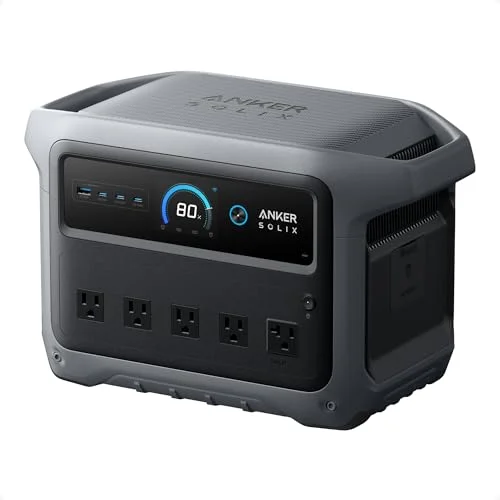
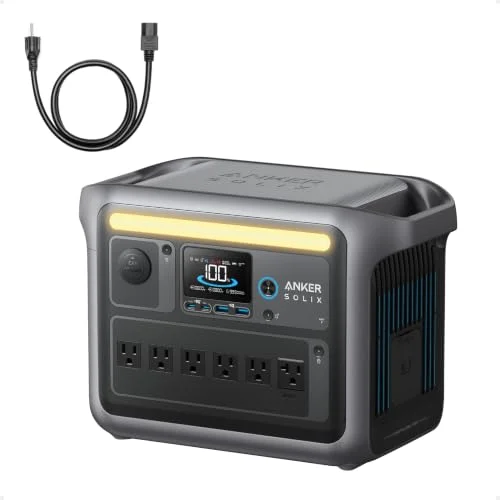
Anker SOLIX C1000 Portable Power Station with Car Charging Cable, 1,056Wh
The C1000 is the budget pick because it delivers about a kilowatt-hour of storage, enough for a real multi-day plan, without engine maintenance, fuel, or exhaust. For a household in an apartment, or a family that wants a quiet setup for the first few days of an outage, this is the most direct answer to the question in this article’s title.
What it handles well is the long list of small loads: phone and tablet charging, a router and modem, LED lights, a laptop, a small fan. The listing states Anker recharges it from a wall outlet, a car charger or solar panels. That car-charging cable, included per the listing, is a useful backup if you can reach your vehicle.
What it does not do is run a full refrigerator and a lot more for a week. For that, you will want to plan around the tank size or add an engine. A power station also does not replace insulation and warm layers: it is a tool for devices, not a furnace.
For lighting off the battery, see our guide to outdoor lanterns, where a rechargeable lantern can save battery power for devices.
Anker SOLIX C1000 Gen 2 Portable Power Station, 1,024Wh LiFePO4
Anker SOLIX C1000 Gen 2 Portable Power Station, 1,024Wh LiFePO4
The Gen 2 stores roughly the same energy as the original while moving to LiFePO4 chemistry, which the maker says is built for long service life. For someone planning to leave a unit on a shelf for years and top it up each season, that chemistry is the main reason to choose it.
Because capacity is nearly identical, the choice between the two Ankers is mostly about preference and availability. The original is the better budget pick; the Gen 2 is the newer generation if it costs a bit more and you want the longer-life chemistry.
Honda EU2200i 2200 Watt Inverter Generator — Editor’s Pick
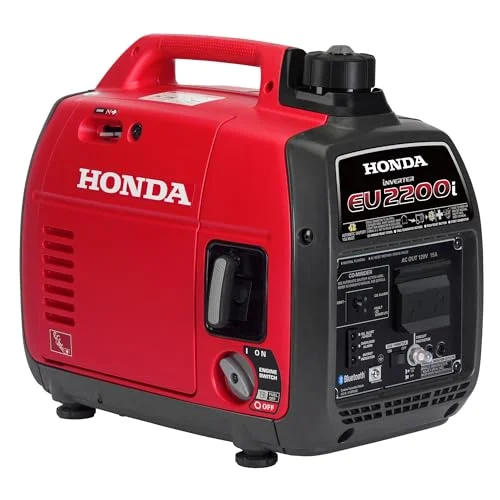
Honda EU2200i 2200 Watt Inverter Generator (EU2200ITAG)
The EU2200i is the small, quiet-for-its-class gasoline generator that many neighbors keep in the garage — stored there, but never run there. It is compact enough for one person to carry to a safe spot outdoors, and it produces the clean power electronics need.
Its place in this comparison is the middle path: more runtime than any battery, as long as you have fuel, with less bulk than a big open-frame unit. A 2200-watt class generator can run a refrigerator and a few small items, but check your refrigerator label for starting surge first, and avoid trying to run a whole house.
Run it outdoors only, at least the distance in the manual from windows and doors, with a battery-backed carbon monoxide alarm inside. Keep fuel in approved containers away from living areas.
Westinghouse 5000 Peak Watt Dual Fuel Inverter Generator — Best Premium
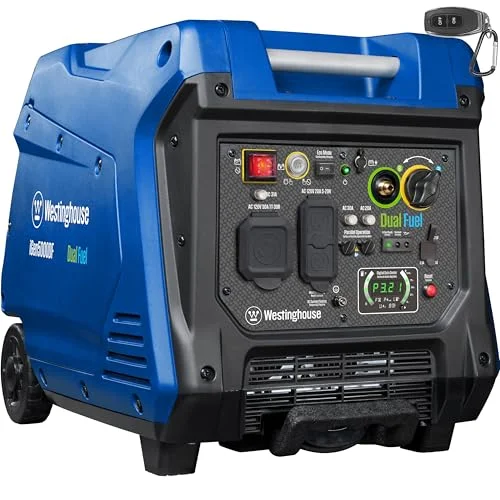
Westinghouse 5000 Peak Watt Super Quiet Dual Fuel Portable Inverter Generator, Remote Electric Start
This is the premium pick. What the extra money buys is capacity and fuel flexibility: higher output than the Honda for running more at once, and the ability to burn either gasoline or propane. If you already keep propane tanks for the grill, that is a second fuel source you may already own.
The listing says it has electric start with a remote, a plus if you would rather start the engine from inside than stand in a storm. The tradeoffs are weight and size. It is a two-person lift for some people, and it needs a dedicated outdoor spot with a cover that keeps rain off without enclosing the exhaust.
Check the running-watt rating in the manual, not just the peak figure on the listing, when you add up your loads. And again: outdoors only, never in a garage, and a battery-backed carbon monoxide alarm inside the house.
Choose a Power Station If / Choose a Generator If
Choose a power station if:
- You live in an apartment or any home without a safe outdoor spot for an engine.
- Your outages are usually under three days.
- You mostly need to run phones, lights, a router and a laptop.
- You want something you can leave on a shelf, charged, with no fuel to manage.
Choose a generator if:
- You live in a house with a safe outdoor space and regular storms or winter weather that last a week or more.
- You need to run a refrigerator, a sump pump or several other loads.
- You are willing to store fuel safely and run the engine a few times a year.
Choose both if you want a quiet battery for the first days and a generator held in reserve for the longest outages.
For cooking when the stove is electric, a propane unit is an option, but only outdoors: our guide to portable grills covers compact models. Never use a grill indoors for heat or cooking.
Cooling and Food Planning
Food is the second reason people think about generators. Keep refrigerator and freezer doors closed as much as possible; the four-hour and 48-hour windows from Ready.gov assume closed doors. A cooler with ice can hold the most-used items so you are not opening the refrigerator repeatedly. A battery can cover a small chest freezer for some time, but check the freezer label for starting watts and compare to the station output before you plan around it.
Comparison Table
| Spec | Anker SOLIX C1000 Portable Power Station with Car Charging Cable, 1,056Wh 8.7/10 | Anker SOLIX C1000 Gen 2 Portable Power Station, 1,024Wh LiFePO4 8.8/10 | Honda EU2200i 2200 Watt Inverter Generator (EU2200ITAG) 9/10 | Westinghouse 5000 Peak Watt Super Quiet Dual Fuel Portable Inverter Generator, Remote Electric Start 8.9/10 |
|---|---|---|---|---|
| Type | Battery power station | Battery power station | Gasoline inverter generator | Dual fuel inverter generator |
| Capacity | 1,056Wh | 1,024Wh | — | — |
| Fuel | None (recharges from wall, car or solar) | None | Gasoline | Gasoline or propane |
| Use | Indoors, no exhaust | — | Outdoors only | Outdoors only |
| Rating | 8.7/10 | 8.8/10 | 9/10 | 8.9/10 |
Prices change daily — tap Check Price for the current Amazon price.
Prices change daily — tap Check Price for the current Amazon price.
FAQ
Can I run a refrigerator on a power station?
Often yes for a limited time, but it depends on the refrigerator’s label watts and the station’s output and capacity. Check both numbers, and expect to leave extra capacity for the startup surge. A battery of about one kilowatt-hour is a short-term answer for a refrigerator, not a week-long one.
Is it safe to run a generator in the garage with the door open?
No. Generators must run outdoors only, at least 20 feet from windows, doors and attached garages according to Ready.gov, or farther if the manual says so. An open garage door does not make it safe.
Do I need a carbon monoxide alarm with a power station?
A battery power station produces no exhaust, so the station itself is not the concern. But if you own any fuel-burning gear, such as a generator, camp stove or grill, keep a battery-backed carbon monoxide alarm on every level of your home.
Can a power station run my CPAP or oxygen concentrator?
Check the wattage in the device manual and ask your supplier about backup power. Do not assume runtime unless the manufacturer states it for that device and that battery.
How should I store a power station or generator?
Follow the manual. Batteries generally want to be kept charged and away from extreme heat or cold. Generators need fuel stored in approved containers away from living areas, and an occasional run so the engine and carburetor stay healthy.
What is the difference between an inverter generator and a regular generator?
An inverter generator produces cleaner, more stable power that is better suited to electronics and is usually quieter. A conventional open-frame generator often costs less per watt but is louder and its output is rougher.
Should I buy solar panels for my power station?
They help a lot in a multi-day outage, but they are sold separately and depend on weather. Check that the panel’s connector and voltage range match the station before buying.
The Bottom Line
For most households, start with a battery: the Anker SOLIX C1000 is the best budget way to keep the essentials running for days, indoors and silently. If you live in a house, face outages that last a week, and have a safe outdoor spot, add a generator: the Honda EU2200i for a compact choice or the Westinghouse 5000 Peak Watt Dual Fuel if you want more capacity and a second fuel option. Whichever you choose, run any engine outdoors only and keep a battery-backed carbon monoxide alarm inside.